Richard Dawkins Quotes
It is grindingly, creakingly, crashingly obvious that if Darwinism was really a theory of chance, it could not work.
Dawkins, Richard. Climbing Mount Improbable. W. W. Norton & Company, 1996, p. 67.


Here the Governor makes a very common error of people who do not have scientific training. They believe that a Scientific Theory is an assertion that has not yet been proven. That is not the way scientists use the term. The Theory of Relativity, Theory of Quantum Mechanics and Theory of Evolution all scientifically refer to a major set of scientific statements and relationships that have been proven over and over again, together with many corollaries and deductions. It is an established, experimentally proven body of knowledge that is still producing additional hypotheses that then need to be proven or refuted. The scientific THEORY is as high as it gets on the scientific scale of proof. The word “theory” used in science is not one fact, but a large set of related facts and their proofs. What the Governor refers to, scientists call hypotheses or speculations. There have been many more proofs of evolution -–many thousands of them—than proofs of Relativity which is actually harder to prove and only has a few thousand proofs. More important, not one person has ever been able to prove scientifically that any of the assertions of evolution are false. Some religions have no difficulty with evolution (Roman Catholics for example) and a few do (fundamentalist Protestants for example). Governor Huckabee was also a fundamentalist Protestant minister. Even the Federal courts have held that the objections and so called “refutations” and alternatives to evolution are religious and not scientific, and hence may not be taught as science in public schools. Non evolution (like creationism) is a religious and cultural notion and should be studied as that.


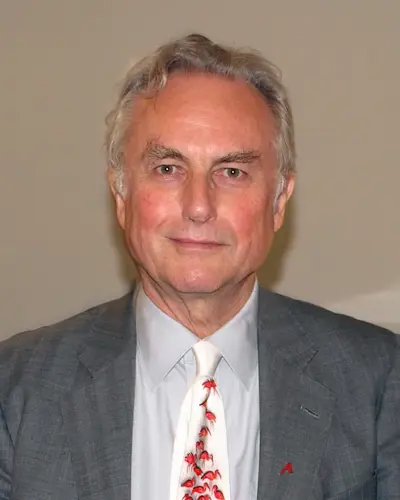
Richard Dawkins FRS FRSL is a British ethologist, evolutionary biologist, and author. He is an emeritus fellow of New College, Oxford, and was the University of Oxford's Professor for Public Understanding of Science from 1995 until 2008. An atheist, he is well known for his criticism of creationism and intelligent design.
