Mary Ritter Beard Quotes
It is grievous to read the papers in most respects, I agree. More and more I skim the headlines only, for one can be sure what is carried beneath them quite automatically, if one has long been a reader of the press journalism.
Beard, Mary Ritter. A Woman Making History: Mary Ritter Beard Through Her Letters. Edited by Nancy F. Cott, Yale University Press, 1991, p. 254.


In 1948 in the midst of the Red Scare the HUAC and its Senate counterpart had started to hound a former Assistant Secretary of State, Lawrence Duggan. Typical of the times, those who disagreed with Duggan’s political views anonymously leaked material to the press alleging that Duggan might have been a spy. The press had a feeding frenzy and Dugan committed suicide in the midst of the pressure. Most in Congress paused to contemplate the consequence of what was occurring. Even Richard M. Nixon regretted the “misunderstandings.” Dugan’s father, however, an old acquaintance of Edward R. Murrow, the then dean of American broadcasters, however primarily blamed the press for printing all the unsubstantiated rumor and innuendo.
Catledge came to California to cover the gubernatorial race between incumbent Republican Governor Merriam and writer Upton Sinclair, an avowed socialist who was running neck and neck. Palmer was then the Political Editor of the Los Angeles Times and his newspaper never covered anything Sinclair did for the campaign and only covered Merriam. Catledge observed that this was not only unfair but poor journalism.


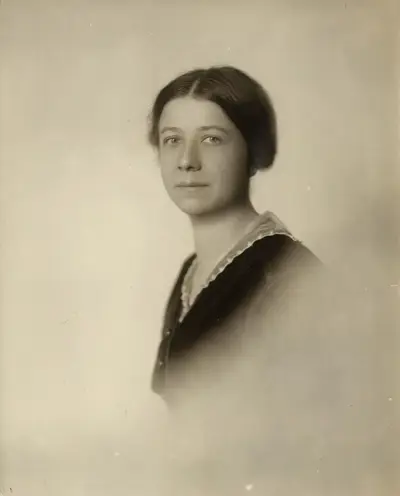
Mary Ritter Beard was an American historian, author, women's suffrage activist, and women's history archivist who was also a lifelong advocate of social justice. As a Progressive Era reformer, Beard was active in both the labor and women's rights movements. She also authored several books on women's role in history including On Understanding Women (1931), America Through Women's Eyes (editor, 1933), and Woman as Force in History: A Study in Traditions and Realities (1946), her major work. In addition, she collaborated with her husband, historian Charles Austin Beard, as coauthor of seven textbooks, most notably The Rise of American Civilization (1927), two volumes, and America in Midpassage: A Study of the Idea of Civilization (1939) and The American Spirit (1942), the third and fourth volume of The Rise of American Civilization series. A standalone book, Basic History of the United States, was their best-selling work.
