Alexander Hamilton Quotes
It is evident from the state of the country, from the habits of the people, from the experience we have had on the point itself, that it is impracticable to raise any very considerable sums by direct taxation.
Hamilton, Alexander. "Federalist No. 21." The Federalist Papers, edited by Clinton Rossiter, Signet Classics, 2003, p. 141.


Kennedy, with great Republican support proposed a reduction of the top income tax rate from 91% to 65%, reduction of the bottom rate from 20% to 14%, and a reduction in the corporate tax rate from 52% to 47%. That put the tax rates at the appropriate level. Economic growth was reasonable until President Reagan’s military spending cold war strategy produced huge deficits, Clinton raised the tax rates slightly and had the best economic growth ever, and had a balanced budget. George W. Bush lowered taxes had much slower growth and even larger deficits. However, by 2013 all hints of bipartisanship were gone. The Republicans claimed that the then tax rates were much too high—the highest income tax was half the rate that most agreed in 1962 was the right rate. And the corporate tax was 35 %, far lower than the Kennedy rate of 47% and incredibly lower when we consider that with deductions that were then in force the average corporate tax was only 12% the lowest since the Great Depression. Meanwhile the 2008 Bush Economic Meltdown and the Great Recession it produced the highest deficits in history with the lowest taxes in modern times and much of the polarized population demanding further tax cuts and an equal number demanding increased tax revenue.


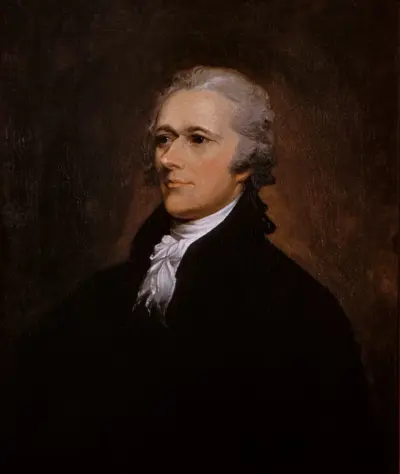
Alexander Hamilton was an American statesman, politician, legal scholar, military commander, lawyer, banker, and economist. He was one of the Founding Fathers of the United States. He was an influential interpreter and promoter of the U.S. Constitution, as well as the founder of the nation's financial system, the Federalist Party, the United States Coast Guard, and the New York Post newspaper. As the first secretary of the treasury, Hamilton was the main author of the economic policies of George Washington's administration. He took the lead in the federal government's funding of the states' debts, as well as establishing the nation's first two de facto central banks, the Bank of North America and the First Bank of the United States, a system of tariffs, and friendly trade relations with Britain. His vision included a strong central government led by a vigorous executive branch, a strong commercial economy, government-controlled banks, support for manufacturing, and a strong military.
