Otto Weininger Quotes
It is certainly true that most men need some kind of a God. A few, and they are the men of genius, do not bow to an alien law. The rest try to justify their doings and misdoings, their thinking and existence (at least the menial side of it), to some one else, whether it be the personal God of the Jews, or a beloved, respected, and revered human being. It is only in this way that they can bring their lives under the social law. . . .
Weininger, Otto. Sex and Character. William Heinemann, 1906.


In 1877 Wasburn was dropped from the List of Ministers by the Unitarian Church. He had become quite atheistic.


This is a very good quotation showing the point of view of religious fundamentalists that if there is no fixed statement of ethics and morality as with the word of God as revealed in the Bible, what then makes anything right or wrong and the world exists in a moral behavioral vacuum. Other religionists hold that the morality is in the metaphors and philosophy of religion and not in the literal words of scripture. Still others argue that morality and religion itself is dynamic and is constantly changing. Then there are those who build their view of morality on philosophy but which is not based on a deity—Ethical Culturalists for example {592791}. Also, there are the pragmatic evolutionists who argue that cooperative behavior has evolved in man and cultural rules—morality—is also transmitted by culture and systems of law.


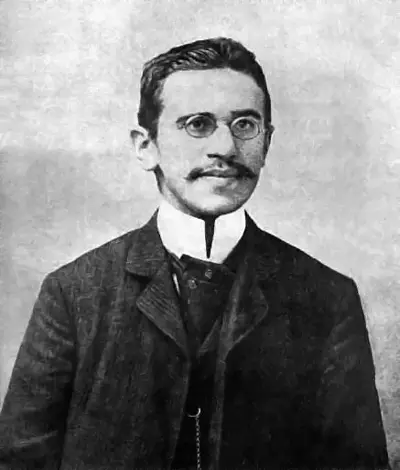
Otto Weininger was an Austrian thinker who lived in the Austro-Hungarian Empire. In 1903, he published the book Geschlecht und Charakter (Sex and Character), which gained popularity after his suicide at the age of 23. Parts of his work were adapted for use by the Nazi regime (while at the same time denouncing him). Weininger was a strong influence on Ludwig Wittgenstein, August Strindberg, and, via his lesser-known work Über die letzten Dinge, on James Joyce.
