C. S. Lewis Quotes
It is a serious thing to live in a society of possible gods and goddesses, to remember that the dullest and most uninteresting person you talk to may one day be a creature which, if you saw it now, you would be strongly tempted to worship, or else a horror and a corruption such as you now meet, if at all, only in a nightmare. All day long we are, in some degree, helping each other to one or other of these destinations. It is in the light of these overwhelming possibilities, it is with the awe and the circumspection proper to them, that we should conduct all our dealings with one another, all friendships, all loves, all play, all politics. There are no ordinary people. You have never talked to a mere mortal. Nations, cultures, arts, civilizations — these are mortal, and their life is to ours as the life of a gnat. But it is immortals whom we joke with, work with, marry, snub and exploit — immortal horrors or everlasting splendors. ... Next to the blessed sacrament itself, your neighbor is the holiest object presented to your senses.
C. S. Lewis, in "The Weight of Glory”, HarperOne, March 2001, first published 1949.


The Title of the Article has often been used to summarize his thesis in this quotation. It has been used so much that most people think that Huntington first originated the phrase and idea. Actually, it was Bernard Lewis. See {636820}

Historians have taken Hudson’s observations seriously ever since.


The same ratio of religious establishments to those that serve or sell alcohol is often the same in the modern city as it was in 1913. This was alarming to many civic leaders—religious and otherwise. Calls for prohibition and regulations limiting saloon hours (especially on Sundays) were common.


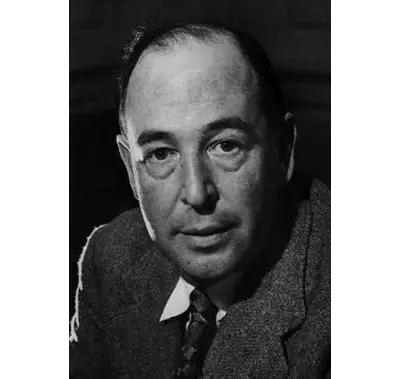
Clive Staples Lewis was a British writer and lay theologian. He held academic positions in English literature at both Oxford University (Magdalen College, 1925–1954) and Cambridge University (Magdalene College, 1954–1963). He is best known for his works of fiction, especially The Screwtape Letters, The Chronicles of Narnia, and The Space Trilogy, and for his non-fiction Christian apologetics, such as Mere Christianity, Miracles, and The Problem of Pain.
