Jared Diamond Quotes
It invites a search for ultimate causes: why were Europeans, rather than Africans or Native Americans, the ones to end up with guns, the nastiest germs, and steel?
Diamond, Jared. Guns, Germs, and Steel: The Fates of Human Societies. W.W. Norton & Company, 1997, p. 16.


In early America large numbers of whites who had been captured by Indians would refuse to leave their new families even when they had the opportunity to do so. J. Hector St. John


Miller was the first Black American admitted to a Graduate Program—Johns Hopkins—in Mathematics


The Cold War was raging, newly independent nations were emerging from colonial rule, and there were revolutions in some parts of the world.


the new nation of South Sudan The President was under indictment as a war criminal by the international Court in the Hague. He had difficulty understanding any other language that of the gun.

This is an incredibly prescient quotation. Dewey saw globalization starting before most realized the change. He wrote this in 1916. Almost a century later, we live with the results of the process that he described.

This is a very interesting quotation because it shows that the South American Indians were not only the victims of Spanish colonialism, but before Europeans ever set foot in the New World, expansionism, conquest and colonialism was alive and well. It was just that one Indian people imposed it on others. Note also the techniques of sending colonists to the new colonies to “civilize” the conquered peoples. Although this was common in Western History (even Alexander the Great used it, it was independently created as a colonial technique in the New World. The most extensive use of this technique was used by the Russians as that expanded to the Soviet Union the consequences of which we see in ethnic strife in the Balkans and the Ukraine even into the 21st century. Often these colonists were used as spies as well, in Peru {641657} as in all the Western examples.
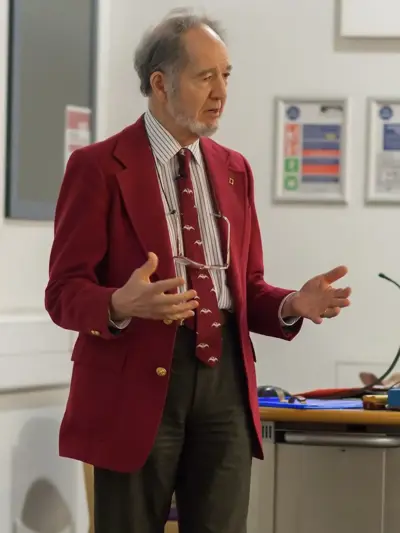
Jared Mason Diamond is an American geographer, historian, anthropologist, ornithologist, and author best known for his popular science books The Third Chimpanzee (1991); Guns, Germs, and Steel (1997, awarded a Pulitzer Prize); Collapse (2005), The World Until Yesterday (2012), and Upheaval (2019). Originally trained in biochemistry and physiology, Diamond is known for drawing from a variety of fields, including anthropology, ecology, geography, and evolutionary biology. He is a professor of geography at UCLA.
