Paul Krugman Quotes
It has been obvious all along, to anyone paying attention, that the politicians shouting loudest about deficits are actually using deficit hysteria as a cover story for their real agenda, which is top-down class warfare. To put it in Romneyesque terms, it's all about finding an excuse to slash programs that help people who like to watch Nascar events, even while lavishing tax cuts on people who like to own Nascar teams.
Krugman, Paul. The New York Times.


Buffet was the 2nd richest man in America and had been the beneficiary of the George W. Bush tax cuts for the wealthy and had profited from a strong economy but one which found middle class workers actually earning less each year.


There are a number of periods in American history when the highest marginal income tax rate for the very wealthy was over 90 percent. The highest marginal rate is not on total income but only on the excess above a threshold amount—based on 2010 dollars, the high rate would only be paid on the income OVER $3 million in that year. Reich was right in saying that some of the greatest growth spurts of the American economy occurred at times where the marginal tax rates were over 90 percent.

The Republicans at the time had adopted a plan to try and prevent Obama from winning a second term. They controlled the House and had enough votes to sustain a filibuster which the Republicans organized (more than all filibusters in the entire history of the Congress). After health reform the President could not get any of his legislation passed while the country had serious economic programs of the Great Recession. With this quotation the President came up with some middle class tax cuts to stimulate the economy and challenged the Republicans who almost always favored tax cuts and used that as a party litmus test.


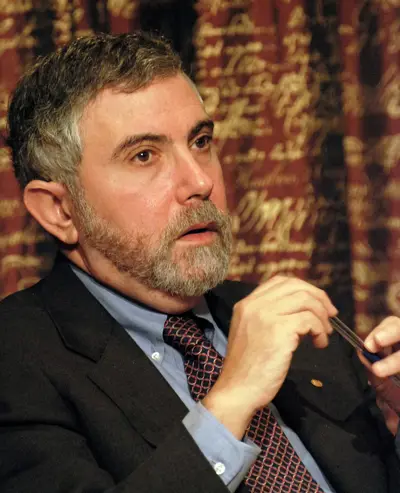
Paul Robin Krugman is an American economist who is the Distinguished Professor of Economics at the Graduate Center of the City University of New York, and a columnist for The New York Times. In 2008, Krugman was awarded the Nobel Memorial Prize in Economic Sciences for his contributions to New Trade Theory and New Economic Geography. The Prize Committee cited Krugman's work explaining the patterns of international trade and the geographic distribution of economic activity, by examining the effects of economies of scale and of consumer preferences for diverse goods and services.
