Joseph Stalin Quotes
Is it possible, then, to doubt that we can and must gain victory over the German invaders? The enemy is not as strong as some terror-stricken pseudo-intellectuals picture him. The devil is not as terrible as he is painted.
Stalin, Joseph. On the Great Patriotic War of the Soviet Union. Foreign Languages Publishing House, 1946, p. 30.


His hubris soon backfired as the Indians learned how to tactically cope with firearms. For example they soon learned that they would see the flash of the musket before the ball would discharge, so would lie down and the bullets would pass overhead. The muskets were effective as defensive weapons from behind barricades though not very accurate. Swords and pikes turned out to be more effective in most cases.

Attila the Hun. If countries formed alliances against him, he took it as a sign of weakness and allies were cowards because they were afraid to fight alone.


The poem was about the failed Italian Revolution in Florence, 1849

The fear of nuclear war was a major emotion for most people in the world at the time. Hard liners like Goldwater were concerned that that fear would undermine support for greater nuclear development and deployment in America and maintaining opposition to nuclear test ban treaties that were under discussion. He made the mistake however of referring to the fear as “craven”, morally denigrating any American who might be in fear of nuclear war, which included just about everyone. So the Democrats took this quotation and used it in their battery of TV ads showing Goldwater as not only a hard liner, but one who had no empathy or understanding for a normal person who feared a nuclear conflict—one who was not to be trusted with the Presidency. Had Goldwater simply argued that legitimate and reasonable fear of nuclear conflict might make the nation too timid and perhaps inadvertently increase the likelihood of nuclear disaster by not standing up to the Russians, he may not have had the resentment from most people who thought Goldwater was calling their fears “craven”.


They made excellent soldiers for the Roman Army.


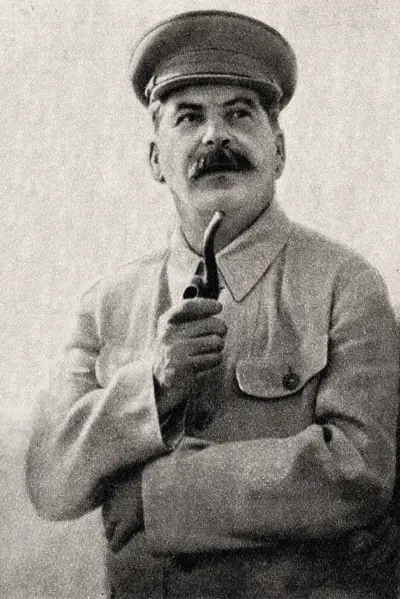
Joseph Vissarionovich Stalin was a Georgian revolutionary and the ruler of the Soviet Union from 1927 until 1953. He served as both General Secretary of the Communist Party of the Soviet Union (1922–1952) and Chairman of the Council of Ministers of the Soviet Union (1941–1953). Despite initially governing the country as part of a collective leadership, he ultimately consolidated power to become the Soviet Union's de facto dictator by the 1930s. A communist ideologically committed to the Leninist interpretation of Marxism, Stalin formalized these ideas as Marxism–Leninism while his own policies are known as Stalinism.
