Ivar Giaever Quotes
Is climate change pseudoscience? If I'm going to answer the question, the answer is: absolutely.
Giaever, Ivar. "Global Warming Revisited." 65th Lindau Nobel Laureate Meeting, 1 July 2015, Lindau, Germany. Address.

This is a classic technique used by politicians of the left and right when they are faced with scientific findings that do not comport with their ideological, religious, or political view of the world. Namely to point out that the science is not settled and the field is still in flux. Therefore, they are, that it si too early to make public policy on the basis of that. And they have little trouble finding that the scientists themselves who did the research that they do not like are the first ones to say that the science is in flux. For ALL SCIENCE IS IN FLUX and new findings are being introduced literally every day in most scientific fields. That very rarely does the new knowledge contradict the older science in huge and dramatic ways. Einstein’s Theory of Relativity turned the field of physics and mechanics upside down but it did not change the calculations that engineers and scientists would make in over 99 percent of their measurements. Within a few decades of Einsteins theory being published, it was demonstrated to be wrong—not completely wrong, but inadequate to measure the mechanics of tiny partials like electrons adn quarks. Quantum mechanics was born. And every week or so these days there is more knowledge that makes slight changes in the way we understand quantum mechanics. No science has ever remained settled for 1000 years since the beginning of scientific inquiry, By the 19th century most science did not remain settled for 100 years. In the 20th century “settled” science rarely lasted more than a decade, and in the 21st century, few are stable for even a year.


This was his last House debate and whereas almost all scientists had agreed that climate change was a serious challenge to the nation, an ideologically driven majority of his Republican Party denied that that there was any climate change that was different from the usual vicissitudes of nature, he tried to persuade his anti-scientific, conservative colleagues to face reality.


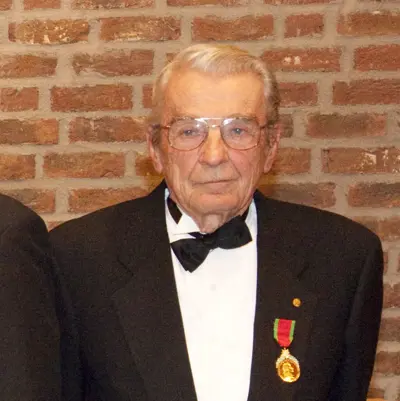
Ivar Giaever is a Norwegian-American engineer and physicist who shared the Nobel Prize in Physics in 1973 with Leo Esaki and Brian Josephson "for their discoveries regarding tunnelling phenomena in solids". Giaever's share of the prize was specifically for his "experimental discoveries regarding tunnelling phenomena in superconductors". Giaever is a professor emeritus at the Rensselaer Polytechnic Institute and the president of the company Applied Biophysics.
