William of Ockam Quotes
Intuitive cognition of a thing is cognition that enables us to know whether the thing exists or does not exist, in such a way that, if the thing exists, then the intellect immediately judges that it exists and evidently knows that it exists, unless the judgment happens to be impeded through the imperfection of this cognition.
William of Ockham. William of Ockham: Philosophical Writings. Edited and translated by Philotheus Boehner, Hackett Publishing, 1990, p. 23.


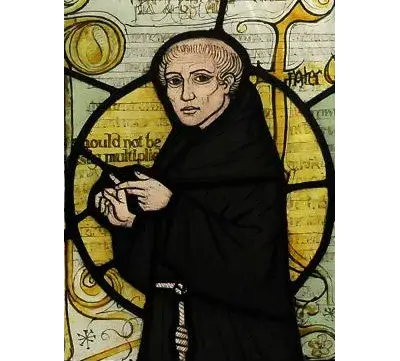
William of Ockham ( c. 1287 – 1347) was an English Franciscan friar, scholastic philosopher, and theologian, who is believed to have been born in Ockham, a small village in Surrey. He is considered to be one of the major figures of medieval thought and was at the centre of the major intellectual and political controversies of the 14th century. He is commonly known for Occam's razor, the methodological principle that bears his name, and also produced significant works on logic, physics, and theology. William is remembered in the Church of England with a commemoration on 10 April.
