Mo Ibrahim Quotes
Intimidation, harassment and violence have no place in a democracy.
Ibrahim, Mo. "Statement on Elections." Mo Ibrahim Foundation, 2008.


In September of 2005 a Danish Newspaper published some political cartoons showing the hypocrisy of some Muslims who use Islam to justify murder of innocents and terrorism. Months later, many in the Middle East protested vehemently and Muslim riots broke out and Danish boycotts ensued because the Prophet Muhammad's visage was depicted against Islamic tradition. Many Muslim leaders claimed that insulting religion was an “abuse” of freedom of speech including those from nations which regularly publish material that is virulent against Christians and Jews.


La Guardia was a very short man and he had gone up to the much larger “poll watcher” and ripped his official button off his coat. The Tammany Hall political machine would appoint thugs as poll watchers to intimidate the voters. If the poll watcher was an "official" voters thought that they might have access to the ballot information and know whether or not they voted for the machine candidates. Their presense was often sufficient intimidation to assure party line voting by most people.


Danish fundamentalist Muslim Groups were demonstrating, protesting, and threatening Danes who wrote or published cartoons depicting the Prophet Mohammed. Other Europeans who had committed what Muslims thought to be blasphemy had been attacked and even murdered by Muslim fundamentalists. Led by Nasim Rahnama, some Danish Muslims, braved attack and possible death, and produced a petition of Muslims defending the right of freedom of publication. See {59932} & {59919}.


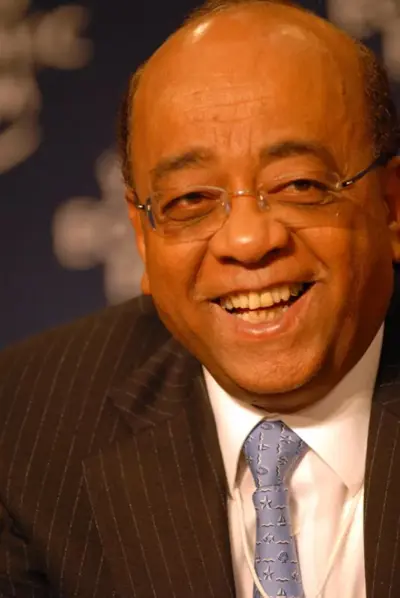
Mohammed "Mo" Ibrahim is a Sudanese-British billionaire businessman. He worked for several telecommunications companies, before founding Celtel, which when sold had over 24 million mobile phone subscribers in 14 African countries. After selling Celtel in 2005 for $3.4 billion, he set up the Mo Ibrahim Foundation to encourage better governance in Africa, as well as creating the Ibrahim Index of African Governance, to evaluate nations' performance. He is also a member of the Africa regional advisory board of London Business School.
