Arthur Schopenhauer Quotes
Intellect is invisible to the man who has none.
Arthur Schopenhauer, 1788-1860, German Philosopher, Our Relation to Others.
Sourced by: Eigen's Political and Historical Quotations

1st Marquees of Halifax. This is a very important quotation because it still has much validity today. The “Prince” is the Monarch, King or Official Heading the State. Savile points out that if the Price does not take the time or make the effort to understand an issue and its complexity, he then must trust his advisors and their opinions rather than have any intelligent and knowledgeable views of his own. In modern times the advice applies to elected officials, executive and legislative. If they do not take time and make the effort to understand a complex issue, they cannot use their own judgment but must accept the judgment of staff, friends, colleagues, party leaders, lobbyists or members of committees who they hope are not also ignorant. In modern legislatures, there are so many different issues in so many areas, that it is very difficult to have the time to make the effort to study all the issues. This problem is compounded with politicians as they tend to spend large amounts of their time fundraising for their next election and simply do not have enough time to study issues. In the Congress for example, most members vote on bills that they have not even read and they end up trusting someone else’s judgment.


While all recognize the importance of that critical intellectual skill, few have developed the skill and ability and all of us make errors frequently. Some, however, are and have been better than others.


Teller had been a strong proponent of developing the H-bomb. Oppenheimer, however, was opposed on moral and strategic grounds. Politically, Oppenheimer had a strong following, having been the “Father of the Atomic Bomb,” and his opposition was hurting the political effort to vote the funds. The Chairman of the Atomic Energy Commission, Lewis L. Strauss, and some in the military decided that they would discredit Oppenheimer by claiming that he had communist leanings and his ideas were influenced by his pro-communist views. Oppenheimer was an easy victim as his brother had been a card-carrying communist and he had always known many left wing academic intellectuals in his university background. Despite the fact that all this had been known by the government security people for years and he had never let a secret leak, a hearing was held to determine whether Oppenheimer’s security clearance should be removed. The key testimony was given by General Groves, Oppenheimer’s former boss who had cleared Oppenheimer for security for years, and Teller. It was later discovered that Groves had been blackmailed into testifying against Oppenheimer. Later Teller, who defended his strong views contrary to Oppenheimer’s, regretted that he won his battle the way he did and told the world that Oppenheimer was a patriot and would never do anything knowingly to hurt his country. To the end of his career over 50 years afterward, there were still many scientists who would turn their backs on Teller at scientific meeting and would not even shake his hand.

Referring to Alexander Haig:


He meant to say “repository” and not “suppository”. The latter is a capsule of medicine that is placed inside the rectum.


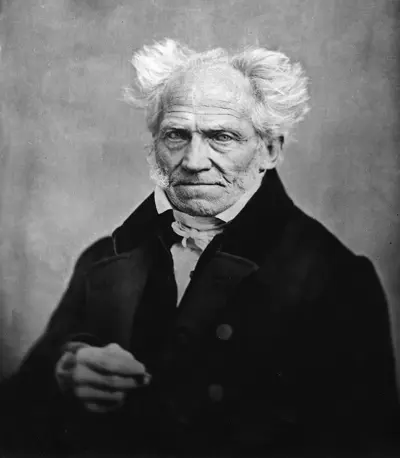
- Born: February 22, 1788
- Died: September 21, 1860
- Nationality: German
- Profession: Philosopher
Arthur Schopenhauer was a German philosopher. He is best known for his 1818 work The World as Will and Representation (expanded in 1844), which characterizes the phenomenal world as the product of a blind and insatiable noumenal will. Building on the transcendental idealism of Immanuel Kant, Schopenhauer developed an atheistic metaphysical and ethical system that rejected the contemporaneous ideas of German idealism. He was among the first thinkers in Western philosophy to share and affirm significant tenets of Indian philosophy, such as asceticism, denial of the self, and the notion of the world-as-appearance. His work has been described as an exemplary manifestation of philosophical pessimism.
