Raghuram Rajan Quotes
Instead of abandoning competition and giving banks protected monopolies once again, the public would be better served by making it easier to close banks when they get into trouble. Instead of making banking boring, let us make it a normal industry, susceptible to destruction in the face of creativity.
Rajan, Raghuram. Fault Lines: How Hidden Fractures Still Threaten the World Economy. Princeton University Press, 2010.


This is a noteworthy quotation because it illustrates—to a slightly exaggerated degree—a major difference between the public and private sectors. However, Conrad fails to point out that when government does try and establish several competitive programs and approaches, conservatives like him are the first say that the government officials do not know what they are doing and then they object to the “duplication” and “waste.” Further, usually, when a government entity does experiment as the private sector competitive system does, it is chastised by liberals and conservatives alike for having had attempts that failed or did not succeed well. Experimenting requires a cultural tolerance for failure or imperfection. Only very courageous executive politicians like President Franklin Delano Roosevelt have been able to initiate many programs aiming at the same objective with the society keeping the best—like Social Security and rejecting the worst like the National Recovery Administration. See {631419} for his view.
4 years after the Great Recession where major banks of America needed government bailouts to prevent failure the Administration and Federal Reserve board wanted to increase the capital requirements to increase the safety of the Banks. Essentially the banks would speculate and gamble with depositors’ money. If their investment paid off, there were large profits and bonuses for the executives. If it did not, they ran out of capital as they had very little of their own at risk. The government bailed them out and the executives got their bonuses anyway. The efforts to make the banks speculate with more of their own money were strongly opposed by the banks and bank executives.


Banks often lie. The system encourages them to do so. In a crisis, if a bank honestly says that it is not sure that it has enough cash and other liquid assets, others will not lend it any more money and depositors will rush to withdraw their money, thereby almost insuring a failure. The bank that lies, might weather the storm and survive.


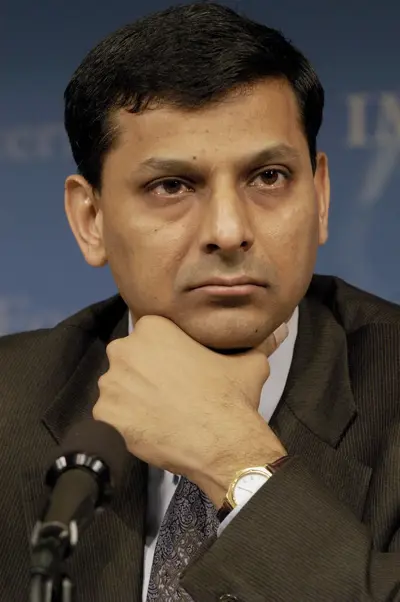
Raghuram Govinda Rajan is an Indian economist and the Katherine Dusak Miller Distinguished Service Professor of Finance at the University of Chicago Booth School of Business. Between 2003 and 2006 he was Chief Economist and Director of Research at the International Monetary Fund. From September 2013 through September 2016 he was the 23rd Governor of the Reserve Bank of India; in 2015, during his tenure at the RBI, he became the Vice-Chairman of the Bank for International Settlements.
