Napoleon Bonaparte Quotes
Incidents should not govern policy; but, policy incidents.
Bonaparte, Napoleon. Napoleon In His Own Words. Translated by Herbert Edward Law and Charles Lincoln Rhodes, A.C. McClurg & Co., 1916, p. 88.


Professor Neustadt had served on the staff of President Harry S Truman so he had a practical perspective from which he spoke in addition to his scholarship.


even though in this case the objective The State Department, the Defense Department and most important President Kennedy had decided to get rid of Diem. Most of the Central Intelligence Agency thought that this was a very unwise policy, because Diem was a known risk, and the people who would replace him and their talents and policies were unknown. The negatives of Diem—the facts that he, a Christian, was persecuting the majority Buddhists, was totally corrupt, and not a very good leader was less distressful to the CIA than to the President and the other agencies as the intelligence agency frequently not only tolerated “offensive” allies, but actually employed them including war criminals. Another importance of this quotation is that it shows that it was by no means certain that the CIA would always follow the orders of the President and the government policy makers. Colby, who was not the agency director at that time but was the head of the South East Bureau, was one high level official who argued that the policies should always be followed even if they were unwise or foolish. Another importance of this quotation is that it illustrate a common error that administrations are frequently forced to make: making a policy decision to eliminate a problem while not having much of an idea of what the alternative or consequence would be when the policy is implemented. The Syrian Civil War in 2013 was a good example. The Government side appeared to have used Chemical Warfare on Civilians and public opinion demanded that we do something. However, having a no-fly zone or any of the alternatives to prevent (punish) the government for the Chemical Warfare would strengthen the rebel side which was made up of numerous factions—some of which were known Islamic fundamentalist terrorists and jihadists. If the balance of power were tipped toward the rebels, the consequence for the American national interests were unknown—just as the consequence of ousting Diem was unknown and turned out to also be bad and was probably worse.

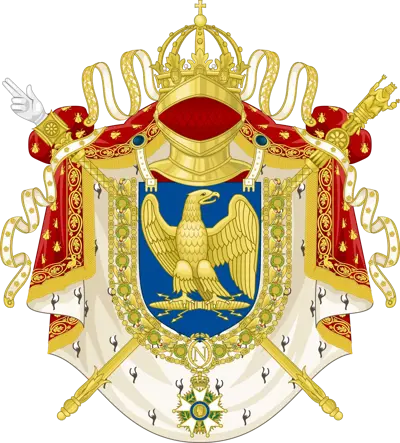
Napoléon Bonaparte was a French military and political leader of Corsican descent. He rose to prominence during the French Revolution and led several successful campaigns during the Revolutionary Wars. As Napoleon I, he was Emperor of the French from 1804 until 1814, and again in 1815. Napoleon dominated European and global affairs for more than a decade while leading France against a series of coalitions in the Napoleonic Wars. He won most of these wars and the vast majority of his battles, building a large empire that ruled over continental Europe before its final collapse in 1815. One of the greatest commanders in history, his wars and campaigns are studied at military schools worldwide. He remains one of the most celebrated and controversial political figures in human history.
