George Herbert Mead Quotes
In wartime we identify ourselves with the nation, and its interests are the interests of our primal selves.
Mead, George Herbert. Mind, Self, and Society. Edited by Charles W. Morris, University of Chicago Press, 1934.


Ataturk had been a military hero, but was very much opposed to war and military adventurism not unlike the Dwight Eisenhower and Colin Powell type leaders. However, the one thing that he thought worth the sacrifice of his own and other Turkish lives was Turkish independence and sovereignty. Historically, the Ottoman Empire which Ataturk finally ended, had dominated half of Europe and all of the Mid East at the cost of sovereignty of other nations and Ataturk saw no more important virtue with dying for than national sovereignty. See {125322} and {584501}.


Russell despised the Commission Chairman, Chief Justice Earl Warren and had refused to serve. Johnson changed Russell's mind. See Richard B. Russell.


“Volk” loosely translated means “the people.” However it carries the connotation of a unity that “the people” does not.

The Poles were fighting the Russians. Pulaski was a Field Marshall. This was before he had come to America and fought in the American Revolution.

This was the address where FDR used the “arsenal of democracy” phrase which became so famous. A similar phrase was used in May by Robert E. Sherwood--{624748}. Then Jean Monnet began to use the exact phrase in Mid 1940--{624746}. He almost certainly had read Sherwood’s earlier, similar phrase. However so had Presidential Aid Harry Hopkins who thought that it would be a good phrase for President Roosevelt to use to “brand” the activity of the United States. So diplomatically, Monnet was asked not to use the phrase any more, and he acceded to the request. At the end of the year, FDR gave his address with this quotation.


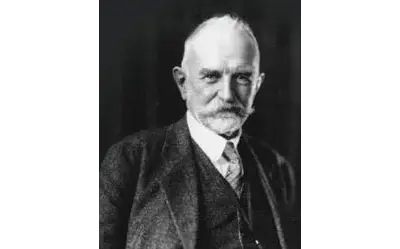
George Herbert Mead was an American philosopher, sociologist, and psychologist, primarily affiliated with the University of Chicago, where he was one of several distinguished pragmatists. He is regarded as one of the founders of symbolic interactionism and of what has come to be referred to as the Chicago sociological tradition.
