Marco Rubio Quotes
In this political climate, there is no possibility of passing anything comprehensive.
Marco Rubio, U. S. Senator (Republican, FL), Interview, PBS The Charlie Rose Show, December 4, 2013
Sourced by: Eigen's Political and Historical Quotations

At the time Congress was gridlocked in bitter hyperpartisan conflict. Most people called for more comity and bipartisanship and most politicians wanted more bipartisanship but blamed the other party for the rift. Mourdock, arguing for less bipartisanship and no compromise defeated Richard Lugar in the Republican Senatorial Primary election. Lugar, one of the most respected and effective Senators was a statesman who worked with any and all to find effective compromises to reach national solutions. The nation was so politically polarized that the Republican Indiana voters ousted one of their most senior senators because he was effective at developing national solutions. See {626717} and {302706} for other Mourdock’s outrageous comments. While this rhetoric won in the Primary, it lost him the general election in a state where Republicans had a strong majority and should have had the seat.

This was one of the worst Congresses in American History and had the worst productivity record—passing very few bills, and none of any significance. The anti-government, Tea Party hyper-conservative Wing of the Republican Party intimidated the Speaker of the House and they were opposed to any compromise at all on anything.

At the time, the Republicans held the House of Representatives, but not the Senate or the Presidency. By popular vote, even the House elections had the majority voting for the Democrats, but the gerrymandering gave the Republicans more seats. A minority of the minority Republicans were Tea Party Republicans—ultra conservatives who would not compromise but who intimidated other Republicans by threatening to run candidates against them in primary elections. The result was that the Tea Party Republicans—a minority of the minority could block almost any legislation and did. That Congress passed less legislation than any in American history including the “Do Nothing Congress” of the Truman era.


In the early years of the Obama Administration, the minority leader of the Senate declared that the object of the Republicans in the Senate was to prevent Obama from being reelected. Therefore, the Republicans used the filibuster to block virtually all legislation. In 2010, the Republicans gained control of the House of Representatives and would not pass any legislation that the President favored lest he get credit for accomplishing something. It had gotten so bad, that even when the President proposed Republican ideas about which everyone agreed, that too was blocked.


With its multiplicity of committees and the polarization of the parties, Congress has been unable to legislate on large, comprehensive problems that involve more than a single issue at a time.

In the beginning of the 21st century political hyper-polarization made Congressional gridlock the norm. Anything that was acceptable to the Democrats would be rejected by the Republicans and vica versa. However, at times, the public would be impassioned by events and demand Congressional action. A movement for gun control after a serious of massacres with assault weapons in 2012 was the example that Thomas was using. If the legislative process could be stretched out until public passions waned, the normal gridlo{78528}k would control and there would be no reform.

Referring to the Senate's right to ratify treaties and the effect on negotiations,


His Republican Party had filibustered more bills in the Senate then had been done previously in all of the Senate History together. Congress passed fewer bills in his first two years than any other Congress in history.


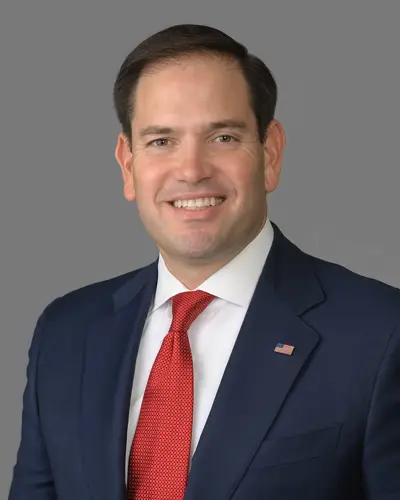
Marco Antonio Rubio is an American lawyer and politician serving as the senior United States senator from Florida. A Republican, he previously served as speaker of the Florida House of Representatives. Rubio unsuccessfully sought the Republican nomination for president of the United States in 2016, winning presidential primaries in Minnesota, the District of Columbia, and Puerto Rico.
