John Paul Stevens Quotes
In the national debate about a serious issue, it is the expression of the minority's viewpoint that most demands the protection of the First Amendment.
John Paul Stevens, U. S. Supreme Court Justice, Deborah Morse et al. v. Joseph Frederick, 2007
Sourced by: Eigen's Political and Historical Quotations


The Nazis were banned from demonstrating in the streets of Skokie, Illinois on the grounds that they would incite violence. However, Goldberger of the ACLU took their case and won their right to spew their hatred before the Supreme Court.


Marlette was inundated by complaints from Muslims for his 2002 cartoon depiction of Muhammad driving a Ryder rental truck like the one used by convicted Oklahoma City terrorist bomber, Timothy McVeigh. The caption was, “What would Muhammad drive?” He was front-page news in Saudi Arabia and other Islamic nations. He received death threats. The Council on American-Islamic Relations and the Muslim World League both demanded an apology. Marlette refused. When he was killed in an automobile crash in July of 2007, many Muslims believed that this was the retribution of Allah.


Striking down a law making cross burning a crime:


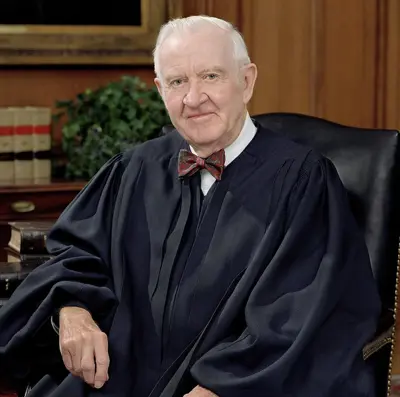
John Paul Stevens was an American lawyer and jurist who served as an associate justice of the United States Supreme Court from 1975 until his voluntary retirement in 2010. At the time of his retirement, he was the second-oldest-serving justice in the history of the court and the third-longest-serving justice. At the time of his death, he was the longest lived Supreme Court justice ever. His long tenure saw him write for the court on most issues of American law, including civil liberties, death penalty, government action and intellectual property. In cases involving presidents of the United States, he wrote for the court that they were to be held accountable under American law. A registered Republican when appointed who throughout his life identified as a conservative, Stevens was considered to have been on the liberal side of the court at the time of his retirement.
