Judith Butler Quotes
In the meantime, what is lost is any sense that the Palestinian resistance to Israeli colonial rule is waged from a situation of occupation or expulsion, that there is a military order that controls the boundaries of what would be a sovereign Palestinian state, that the land on which that state is now thinkable has been radically diminished by an ongoing practice of land confiscation and appropriation.
Butler, Judith. Precarious Life: The Powers of Mourning and Violence. Verso, 2004.


At that time Jews in Palestine were in the minority. The issue of how to obtain the land was hotly debated amongst Jewish groups. Jabotinsky was at one extreme—colonize and take the land just as the Arabs had done to the Jews when there was a Jewish majority. His view did not however prevail. The policy was to buy the land from individual Arabs and Jewish land up to 1948 was obtained that way. In that year the UN partitioned Palestine and 11 Arab armies attacked the new state of Israel and asked the Arab civilians to leave the area so that the Army could cleanse it of Jews. Many did not, and they or their descendants are still on their land or have sold it. The Arabs who left, were suspected of being possible collaborators or terrorists, and they have never been paid for their land or allowed to return. Compensation is still in dispute. At the same time Jews driven out of Arab countries by law and the military have never been compensated or given any right of return either.


See {636935}for the policy decision that triggered this order.

In developed nations land tends to be fungible—there is a fair market value to land and there is little emotional attachment to a particular piece of land. However for aborigines and citizens of many lesser developed countries, land is not fungible. Ancestor burial, tradition, family identity, dignity requires a particular plot of land—not just acreage. So taking of land—even with monetary compensation—is often liable to induce violent protest.


Emerson was right on both points. It was the first U. S. foreign policy effort where invading and conquering a country was much easier than dealing with it afterward.


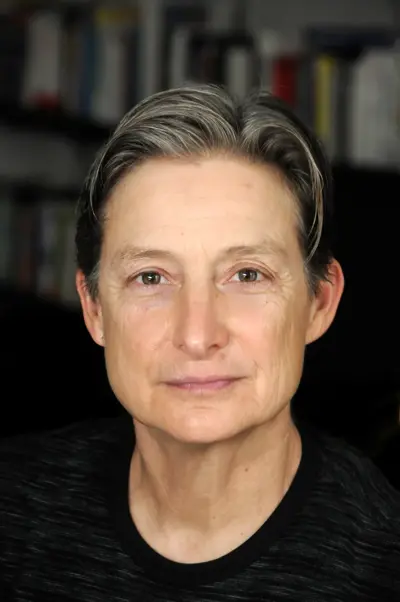
Judith Pamela Butler is an American philosopher and gender theorist whose work has influenced political philosophy, ethics, and the fields of third-wave feminist, queer, and literary theory. In 1993, Butler began teaching at the University of California, Berkeley, where they have served, beginning in 1998, as the Maxine Elliot Professor in the Department of Comparative Literature and the Program of Critical Theory. They are also the Hannah Arendt Chair at the European Graduate School.
