Richard M. Weaver Quotes
In the last analysis, provincialism is your belief in yourself, in your neighborhood, in your reality. It is patriotism without belligerence. Convincing cases have been made to show that all great art is provincial in the sense of reflecting a place, a time, and a Zeitgeist.
Weaver, Richard M. "The South and the American Union." The Lasting South, edited by Louis D. Rubin, Jr. and James Jackson Kilpatrick, Henry Regnery Company, 1957, p. 48.


Batavia was another name for the Netherlands.


This parochial and sectional point of view was held much more strongly by the South and to a great extent, still is. We are all conflicted by wanting and American culture (that can be adopted by the world in globalization) and also wanting local customs, cultures, norms, policies and thought patterns to exist. However, there is inevitable conflict between the two, so it is a constant American source of debate, ebb and flow.

The Southern authorities were particularly angry with people form the North coming South to demonstrate over unconstitutional and immoral segregation laws. Northerners were considered as having no business with Southern desegregation. Mrs. Peabody, and the wives of a number of wives of Christian Bishops, black and white, went to a restaurant in St. Augustine and requested service which was contrary to the segregation laws of Florida at the time. The women were arrested. The act of civil disobedience in integrating the restaurant was one act of a planned desegregation strategy worked out with Martin Luther King’s SCLC organization. The mature age of the women and their prominent husbands brought a great deal of newspaper coverage which is just what the demonstrators wanted. The photo is of Mrs. Peabody getting arrested. See {637404} and {637406} for more on this incident.

While many citizens in the state are very appreciative of this viewpoint, others feel that the nation should come first.
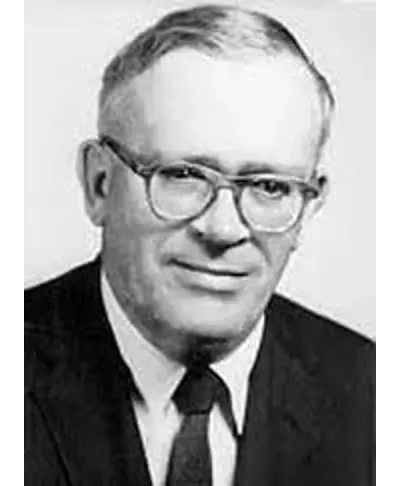
Richard Malcolm Weaver, Jr was an American scholar who taught English at the University of Chicago. He is primarily known as an intellectual historian, political philosopher and a mid-20th century conservative and as an authority on modern rhetoric.
