David Director Friedman Quotes
In the ideal socialist state, power will not attract power freaks. People who make decisions will show no slightest bias towards their own interests. There will be no way for a clever man to bend the institutions to serve his own ends. And the rivers will run uphill.
This quotation is a use of language that is very dangerous for politicians and those who would interact with them. The first three sentences are absurd and Friedman makes that point without ever saying it in the last sentence. However, if someone had quoted the first three sentences without the fourth, one would think that Friedman was a hopelessly naïve socialist and not the anti-socialist that he was.
David Director Friedman, Political & Economic Author & Critic, The Machinery of Freedom
Sourced by: Eigen's Political and Historical Quotations


After the Gulf War Khaled stepped down and returned to his previous military position where he was junior to many of those he had commanded in war. The situation was awkward for an authoritarian nation. He was then promoted to 4 star general by royal decree and resigned from the military.


Fabianism was a movement based on a meritocracy. Populists and Fabianists were the polar opposites with each each an extreme approach to a legitimate problem. There are no modern successful societies that do not deal with the issues raised by Populists and Fabianists nd akso avoid going to one r either of these extremes. The modern battle for power in democartic socities is between Populism and Fabianism.


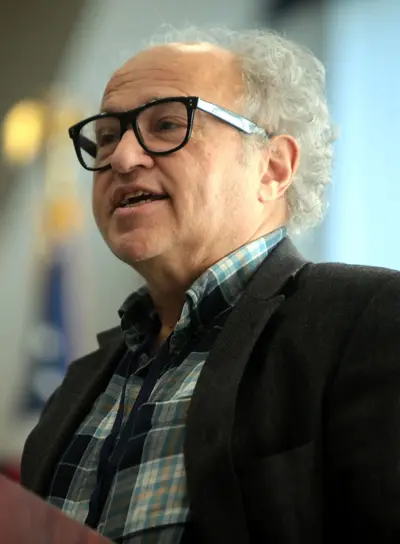
David Director Friedman is an American economist, physicist, legal scholar, and anarcho-capitalist theorist. He is known for his textbook writings on microeconomics and the libertarian theory of anarcho-capitalism, which is the subject of his most popular book, The Machinery of Freedom. Besides The Machinery of Freedom, he has authored several other books and articles, including Price Theory: An Intermediate Text (1986), Law's Order: What Economics Has to Do with Law and Why It Matters (2000), Hidden Order: The Economics of Everyday Life (1996), and Future Imperfect (2008).
