Alexander Dubcek Quotes
In the first moments, the members of the Presidium who were with me at the Secretariat were taken to the Party Central Committee under the control of Soviet forces.
Dubček, Alexander. Speech at the Soviet-Czechoslovak Talks in Moscow, 23-26 Aug. 1968. Transcript in The Prague Spring 1968: A National Security Archive Documents Reader, edited by Jaromír Navrátil, Central European University Press, 1998, p. 432.


He was a virulent anti communist and an opponent and foe of Chiang Kai-shek who he regarded as too moderate.


Lev Davidovich Bronstein


This was a big factor that made the Red Scare so damaging.


After the breakup of the Soviet Union, NATO expanded to include some fo the former Soviet Nations thus moving NATO territiry to the East--closer to Russia, whose leaders percieved that the expansion was hostile and dangerous for the indpendence of Russia. What made the situation more complex is that the American Secretary of State, when the Soviet Union was very powerful, had made an agreement with the Soviets that in return for Russian aquiessance of NATO being extended to East Germany, NATO would not expand further West. But after the collapse of the Soviet Union, Russia was quite weak and NATO expanded east despite the earleir comittment. The US and th eother NATO counties took the pozition the previous comitmnts were not binidng as they were never formally signed. The Russians then decided to take a hard line position and flaunt and use military force to which would stop the Western expansion closer to the Russian border.


Harriman at that time was the United States Ambassador to Russia and one of President Roosevelt’s closest advisers. There were those who claimed that the Roosevelt administration was very naïve about the potential danger of Stalin. This statement as well as others like it, show that the administration was not so naïve and ignorant.

Seeger had joined the Young Communist League as a young boy, and was a supporter of Joseph Stalin until all the information about Stalin was made public by Russian Premier Nikita Khrushchev. Seeger, along with other Stalin apologists throughout the world realized that the criticisms of Russian Communism under Stalin were not just right wing propaganda.


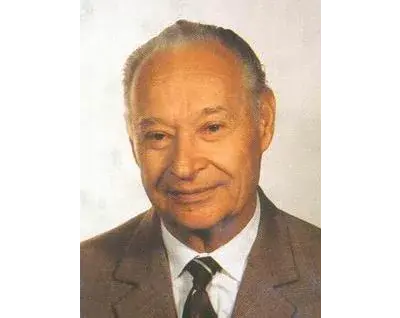
Alexander Dubček was a Slovak politician who served as the First Secretary of the Presidium of the Central Committee of the Communist Party of Czechoslovakia (KSČ) (de facto leader of Czechoslovakia) from January 1968 to April 1969. He attempted to reform the communist government during the Prague Spring but was forced to resign following the Warsaw Pact invasion in August 1968.
