Edward G. Bulwer-Lytton Quotes
In science, address the few; in literature, the many. In science, the few must dictate opinion to the many; in literature, the many, sooner or later, force their judgment on the few…. In science, read, by preference, the newest works; in literature, the oldest.
1st Baron Lytton of Knebworth. This non democratic nature of science causes politicians in a democracy difficulty in many situations. In Southern communities where there are a high percentage of Fundamentalist Christians over 60 percent of the citizens are convinced that The Theory of Evolution is not only in error but is a negative force in society and should not be taught in schools. Yet virtually all the biological scientists—a small minority of the population tell the politicians the contrary, and that Evolution is one of the most important aspects of their science. Many politicians have trouble coping with this type of problem—go with the few or the many.
Edward G. Bulwer-Lytton, 1803-1873, Novelist & British Colonial Secretary (Conservative), Caxtoniana: A Series of Essays on Life, Literature, and Manners, 1863
Sourced by: Eigen's Political and Historical Quotations


Lankester was a preeminent scientist of his day and a leader of the conservative British establishment. Germany had a system of scientific education which at the time was the envy of most other sophisticated countries. It is noteworthy that he was the only conservative who was among the 9 mourners at the funeral of Karl Marx.


The Latin means “the voice of the people is the voice of God.” See Alcuin if York {593018} for a quick history of the statement. Essentially, in science public opinion is irrelevant or at least should be. One of the major political issues in our society is whether ideology and/or public opinion should control policy and practice of scientific issues, methods, and practices.


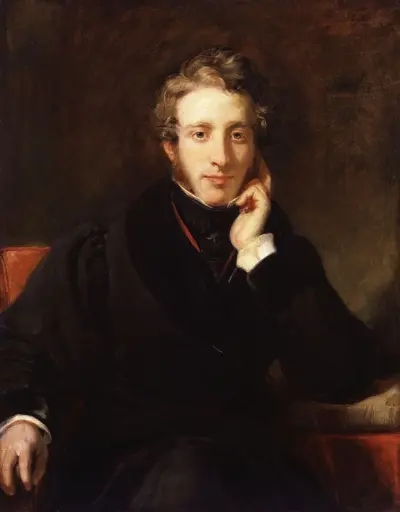
Edward George Earle Lytton Bulwer-Lytton, 1st Baron Lytton, PC was an English writer and politician. He served as a Whig member of Parliament from 1831 to 1841 and a Conservative from 1851 to 1866. He was Secretary of State for the Colonies from June 1858 to June 1859, choosing Richard Clement Moody as founder of British Columbia. He declined the Crown of Greece in 1862 after King Otto abdicated. He was created Baron Lytton of Knebworth in 1866. He coined the phrases "the great unwashed", "pursuit of the almighty dollar", "the pen is mightier than the sword", and "dweller on the threshold", and the opening phrase "It was a dark and stormy night." Yet his standing declined and he is little read today. The sardonic Bulwer-Lytton Fiction Contest, held annually since 1982, claims to seek the "opening sentence of the worst of all possible novels".
