James O. Eastland Quotes
In politics, loyalty is everything.
James O. Eastland, 1904–1986, U. S. Senator (Democrat, MS), Quoted in Speakes, Speaking Out, Scribners, 1988
Sourced by: Eigen's Political and Historical Quotations


Wilson was disabled and there was no provision for Presidential Disability then. Some suggested that he should be pressured to resign.

In the British Constitutional Monarchy of the Victorian Era, the Queen still possessed enormous power and many in Parliament was constantly trying to have Parliament assume many of the Queen’s powers. The Prime Minister was in an awkward position. On the one hand, he was the Queen’s Prime Minister and leader of HER government. At the same time he was the leader of the political party that had won the last Parliamentary election. His party was trying to usurp some of the Queen’s powers and Peel explained to the Queen’s assistant that he would generally side with the Queen against his own party. It is doubtful that Anson and the Queen believed Peel on this point as his position as Prime Minister depended not on his being elected by the voters but by his party members of Parliament. In modern times, the British monarch has few real powers but is still very influential so there are no struggles over power with Parliament.


This was an amazing statement for a politician to make in a country where he needed votes to be reelected. The Afrikaners of South Africa were so paranoid about the possibility of their minority domination over the majority Blacks, that they voted overwhelmingly for Botha even though many were not sure of his policies and wanted a change. Botha was the “devil they knew” as opposed to a “devil they did not know”.

This was a new political phenomenon where a President was perceived as more important, more powerful, and preferable to his party. Note that the base of the scale is labeled “Public Opinion”.


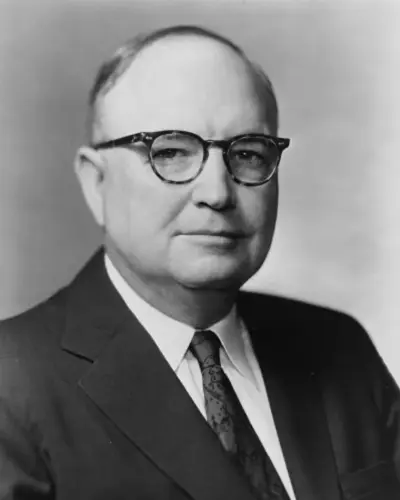
James Oliver Eastland was an American politician from the state of Mississippi who served in the United States Senate as a Senator in 1941; and again from 1943 until his resignation on December 27, 1978. He has been called the "Voice of the White South" and the "Godfather of Mississippi Politics." A Democrat, Eastland was known as the symbol of Southern resistance to racial integration during the civil rights era, often speaking of blacks as "an inferior race."
