Christopher Hitchens Quotes
In order to terminate a pregnancy, you have to still a heartbeat, switch off a developing brain.
Hitchens, Christopher. Arguably: Essays. Twelve, 2011.


This is very surprising to most modern observers. If a pregnant woman died, there were in some cases those in the family who were just as happy that she passed away before the child was born as the laws of inheritance and succession were dependent on which children lived. The father might be away, and someone would not want a new or another heir, might just bury the pregnant woman. The Romans actually had some very sophisticated medical skills. Julius Caesar, for example, was born via what we today call a “Ceasarean Section.” If a pregnant woman was close term, and she dies, the Romans had the skill to do a C Section on the dead woman and could sometimes save the baby. That ancient Romans considered the fetus as a potential life, is sometimes used by anti abortion forces. However, if they do their research, they would find that Roman law allowed abortions. The decision however had to be the mother’s and the father’s. What this law did is to preserve the possibility of the fetus’s being born alive with surgery when the mother was dead and the father might not be near.


Portugal, a traditional Roman Catholic nation where the Church has always had great influence, had laws banning abortion. However, in a national referendum the Portuguese people voted overwhelming to allow abortion despite the Church’s stand. The Parliament then overwhelmingly passed a law legalizing abortion on demand up to the 10 the week of pregnancy. The President, though opposed personally to abortion signed the bill. This quotation illustrates a common occurrence in industrial democracies whereby politicians will not impose their personal moral views on the laws of society but may well have contrary personal views.


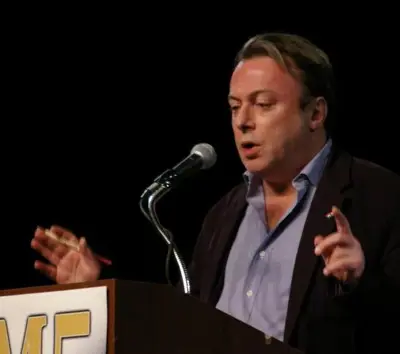
Christopher Eric Hitchens was an English-American intellectual, polemicist, and socio-political critic, who expressed himself as an author, orator, essayist and columnist. He wrote, co-wrote, edited or co-edited over 30 books, including five of essays on culture, politics and literature. Having contributed to several publications, he is broadly regarded as one of the most influential atheists of all time.
