Ryszard Kapuscinski Quotes
In modern Russia, you have no official, formal assessment of this past. Nobody in any Russian document has said that the policy of the Soviet government was criminal, that it was terrible. No one has ever said this.
Kapuściński, Ryszard. Imperium. Translated by Klara Glowczewska, Alfred A. Knopf, 1994.

This was a big factor that made the Red Scare so damaging.


1st Viscountess Snowden. See Winston Churchill regarding the most famous use of the “iron curtain” phrase {411311}. She seems to have been an earlier user. The phrase " iron curtain" was used by T. St. Vincent Wallace Troubridge a few months earlier than Churchill. Also, it appears to have been used earlier than that by Nazi Propaganda Minister Joseph Goebbels in Das Reich {601664}. But George Washington Crile used the phrase in a political context in 1915 {598870}. And Viscountess Snowden used the phrase in her memoirs of a Past WWI trip to Russia {616546}. It is not known whether Troubridge or Churchill were familiar with any of these other works.
After the breakup of the Soviet Union, NATO expanded to include some fo the former Soviet Nations thus moving NATO territiry to the East--closer to Russia, whose leaders percieved that the expansion was hostile and dangerous for the indpendence of Russia. What made the situation more complex is that the American Secretary of State, when the Soviet Union was very powerful, had made an agreement with the Soviets that in return for Russian aquiessance of NATO being extended to East Germany, NATO would not expand further West. But after the collapse of the Soviet Union, Russia was quite weak and NATO expanded east despite the earleir comittment. The US and th eother NATO counties took the pozition the previous comitmnts were not binidng as they were never formally signed. The Russians then decided to take a hard line position and flaunt and use military force to which would stop the Western expansion closer to the Russian border.

Even leading Soviet officials were critical of the Stalin era and Stalin’s brutal, dictatorial methods.
The “execution” to which she refers was the famous speech given to communist party leaders by Nikita Khrushchev where he publicly revealed the worst crimes of Stalin and Stalinist Russia. Prior to that, publicly Stalin was godlike in the Soviet Union. Decades of disillusionment with Stalinist Russia set the stage for the fall of the Soviet Union which was also accompanied by massive corruption, economic chaos and a diminution of the standard of living of most Russians. Some, including many of the younger people who had not lived through the Stalinist horrors, were resentful that the great era of Soviet military, scientific, and political greatness and dominance was completely overshadowed by the revelation of the purges, gulags, terror and murder. Prudnikova represents that school of thought.


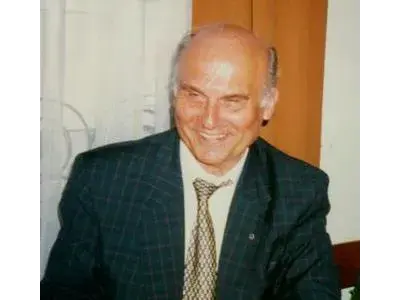
Ryszard Kapuściński was a Polish journalist, photographer, poet and author. He received many awards and was considered a candidate for the Nobel Prize for Literature. Kapuściński's personal journals in book form attracted both controversy and admiration for blurring the conventions of reportage with the allegory and magical realism of literature. He was the Communist-era Polish Press Agency's only correspondent in Africa during decolonization, and also worked in South America and Asia. Between 1956 and 1981 he reported on 27 revolutions and coups, until he was fired because of his support for the pro-democracy Solidarity movement in his native country. He was celebrated by other practitioners of the genre. The acclaimed Italian reportage-writer Tiziano Terzani, Colombian writer Gabriel García Márquez, and Chilean writer Luis Sepúlveda accorded him the title "Maestro".
