Thomas Paine Quotes
In every quarrel between two gentlemen where satisfaction is thought necessary, let the parties be empowered to summon a jury of honour from among their friends, six to be appointed by one gentleman, and six by the other …. Let this jury of honour, when duly assembled, discuss the merits of the dispute in question, and form their opinion by a majority of votes; but to guard against generating fresh quarrels by the discovery of the votes on either side, let the whole twelve be bound to secrecy upon their honour, and the whole twelve sign the verdict of the majority. Let a copy of this verdict be delivered to the gentleman whose conduct is condemned; and if he refuses to make the required concession or due satisfaction, let this opinion be published in such a manner as may be thought proper, and be understood to divest him of his character as a gentleman so long as he remains contumacious. By this single expedient, conveyed in few words, it is hoped the necessity of duels may be effectually superseded, the practice suppressed, and ample satisfaction enforced for all injuries of honour.
Paine was not only a reformer who was critical of aspects of society, but he was very creative in coming up with ideas for progress. Unfortunately, his Dueling suggestions were never adopted and many great Americans—including Alexander Hamilton--were killed in the stupid and barbaric custom.
Thomas Paine, 1737-1809, British American Political Philosopher, Dueling, May, 1775
Sourced by: Eigen's Political and Historical Quotations

He was outraged at what he perceived to the coverage of him that he felt attacked his honor and character.

The card was issued to all American troops in the theater. Similar versions were distributed to troops in Iraq, and other Arab countries.


This is one of the proverbs of King Solomon of the Jews, son of King David.


This is one of the earliest American articulation of the 12 man jury.

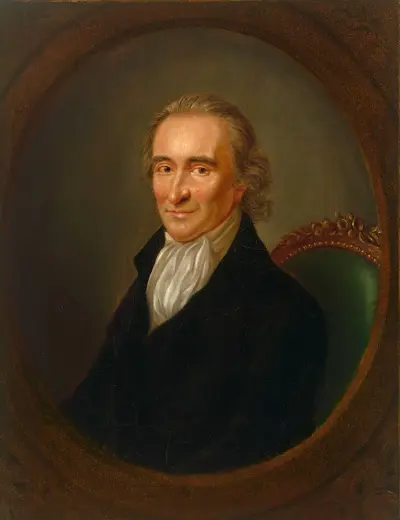
Thomas Paine was an English-born American political activist, philosopher, political theorist, and revolutionary. He authored Common Sense (1776) and The American Crisis (1776–1783), the two most influential pamphlets at the start of the American Revolution, and helped inspire the patriots in 1776 to declare independence from Great Britain. His ideas reflected Enlightenment-era ideals of transnational human rights. Historian Saul K. Padover described him as "a corsetmaker by trade, a journalist by profession, and a propagandist by inclination".
