John F. Kennedy Quotes
In addition, the United States Delegation will suggest a series of steps to improve the United Nations machinery for the peaceful settlement of disputes... - for extending the rule of international law. For peace is not solely a matter of military or technical problems - it is primarily a problem of politics and people.
Kennedy, John F. "Address to the United Nations General Assembly." 25 Sept. 1961. Public Papers of the Presidents of the United States: John F. Kennedy, 1961. U.S. Government Printing Office, 1962, p. 621.

Ingersoll was considered to be the greatest orator and political thinker of his day, but his overt atheistic views curtailed his elected political career. Ever since the founding of our republic, the concept of a World Court has been polarizing. In the early days of the nation, many Americans did not trust the more powerful European states to be fair. When we became the most powerful state, many of us didn’t trust the weaker nations to be fair and maintain our standards of law.

This is one of he earliest uses of the term “policemen of the world.”

One major problem at the time was that the Soviet Union was supporting and instigating revolutions in many parts of the world. When most nations of the UN wanted to provide peace keeping troops to quell the conflict, the Russians would veto and block the effort, Vandenberg wanted the UN to change the rules regarding the veto. The right of veto for the major nations was originally included in the UN Charter at the insistence of the United States, and many Americans did not want to give it up or have any exceptions lest there be more in the future. The Russians at that time also did not want to give up any of their veto powers. Another method that Vandenberg wanted to solve the Russian peacekeeping blockage problem was for America to engage in more collective security pacts so that action could be taken without UN Security Council unanimity by going around the UN.


Son of John Jay. Father of Harriet Beecher Stowe and Henry Ward Beecher

With Germany’s WWII history of military aggression, even over 60 years later, that country was very cautious about any use of military force and unilateral force was out of the question.


3rd Earl Russell of Kingston. The military weak nations agreed with him, but the militarily strong ones did not—especially America and England which had the Atomic Bomb when others did not.


Actually it was the United States which insisted in the veto which required consensus of the great powers of the time. It was Russia which ended up using it far more often than any other nation.
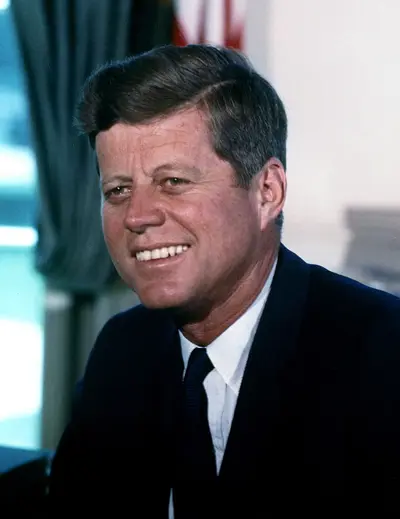
John Fitzgerald Kennedy, often referred to by his initials JFK, was an American politician who served as the 35th president of the United States from 1961 until his assassination in 1963. Kennedy served at the height of the Cold War, and the majority of his work as president concerned relations with the Soviet Union and Cuba. A Democrat, Kennedy represented Massachusetts in both houses of the U.S. Congress prior to becoming president.
