Richard Rorty Quotes
In a theocratic country, a leftist political opposition must be prepared to counter the clergy’s claim that the nation’s identity is defined by its religious tradition. So the left needs a specifically secularist form of moral fervor, one which centers around citizens’ respect for one another, rather than on the nation’s relation to God.
Richard Rorty, 1931-2007, Philosopher, Interview, The Progressive, August 2007
Sourced by: Eigen's Political and Historical Quotations


Although the Puritans were the first religious group of immigrants who came to America for religious freedom, once the obtained it, they were terribly despotic in trying to force others to adopt their religious views. By seeking religious freedom the planted the seeds of democracy. By denying it to others, they also planted the seed of the First Amendment. Those who insisted upon separation of church and state always cited the Puritans as example one of what can happen with an established church in America.

The Torah comprises the first 5 books of the Bible (Old Testament). The Arab countries of the Middle East are not alone in having to content with ultra-religious clerics who want to control the government and use it to impose religious law on the entire population. Israel also has the problem. In the Arab countries to deny being religion is to put yourself in danger including risking your life. So no one really knows what proportion of the population supports the religious imposition from the government. In Israel, however, this is easily determined by polls. The majority of Israelis are secular Jews. Of the religious Jews, the majority of them believe in extensive separation between the state and the religion. But there is a minority of ultra-orthodox which would have Israel to be a Theocracy. They are a minority but they are politically very strong. They receive large financial support from extremely wealthy Americans, have religious political parties, are extremely passionate advocates, and are willing to devote huge amounts of time to make Israel a more religious state and ideally a theocracy. Ironically, there is a great religious and philosophical similarity between the extremist Jews of Israel and the extremists Muslims in many of the Arab nations. They both want a theocracy. The only difference is which religion should the Theocracy represent.


Bush was trying to obtain the Republican Presidential Nomination and that party had come under the influence of Protestant Evangelicals who could in effect veto any candidate in the Primary election. Bush, who was already suspect with the Evangelicals, chose to make this statement with the full knowledge that there is no Constitutional citizenship requirement to believe in a god and that a number of the leading founding patriots and founders had been atheists. However his tactics were successful and the following year he was the Republican nominee. Despite this statement, he never acted on it or made it a part of his administration’s principles. Politicians are often placed in these difficult positions where they are pressured into positions not to their liking in order to politically succeed. In this case, he never did more than make the disgraceful statement. He did not adopt any policy of take any action. However, this quotation is unique in American history as the only time an American president ever stated that American citizenship should not be recognized for religious reasons only.

Liberty University was a Christian Evangelical school that was controlled by conservative Republican figures, and unlike regular universities was not bipartisan. This quotation is significant because all secular universities and the vast majority of religious universities have been non-partisan and allowed political interest clubs for all political parties. Liberty university was an example of a new role for religion and religious universities—identifying with one political party and prohibiting its students from campus activities of the other major party.


This quotation illustrated the extreme polarization between the current fundamentalist Muslims, and the Muslim modernists and the West. Kamal Ataturk, the great leader and stateman who is the father of modern Turkey, is castigated by the author for leading the new Turkish parliament to depose the Caliph – the civil and religious autocrat, one of whom reigned from after the death of Muhammad till his abolishment in 1924. Most of the rest of the world credits Ataturk with being one of the great leaders of all time—one who led a democratic revolution which transformed Turkey into the only Muslim secular democracy, requiring pubic secular European type education for all children, giving women the right to vote (before the U. S. even), adopting a European alphabet and dress, and outlook on life—creating most remarkably a total cultural revolution with virtually no loss of life. No revolutionary leader, before or since has led so extensive a political and cultural revolution, and it was a bloodless revolution. Turkey, into the 21st century, was by far the most powerful, industrialized, scientific and modern nation of Muslims in the world and others were far behind. Yet many Islamic theologian still castigate Atatork for his great achievements as being against the will of God.


The irony is that the Zionist movement was very democratic long before most of the world had adopted democracy. They not only saw no conflict between a Jewish Homeland and democracy, but they maintained that Jewish tradition required democracy. After 60 years if constant attacks by its neighbors and having to defend the nation from invasion and extinction, the Israeli body politic actually became very conservative, while the Zionists were extremely left wing. Under the concept of Zionism there was a large population of Arabs as Israeli citizens. However, when some of those Arabs were openly against the nation in its struggle with the Palestinians and its other Muslim neighbors. Leiberman led the right wing effort in various efforts to expel the dissident Arab citizens and use very non democratic methods to cope with the right wing’s perception of the risk to the Jewish State.
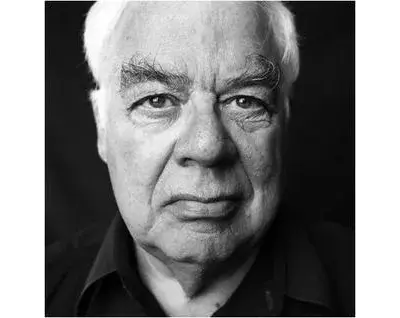
Richard McKay Rorty was an American philosopher.
