Fyodor Dostoevsky Quotes
In a morbid condition of the brain, dreams often have a singular actuality, vividness, and extraordinary semblance of reality. At times monstrous images are created, but the setting and the whole picture are so truth-like and filled with details so delicate, so unexpectedly, but so artistically consistent, that the dreamer, were he an artist like Pushkin or Turgenev even, could never have invented them in the waking state. Such sick dreams always remain long in the memory and make a powerful impression on the overwrought and deranged nervous system.
Dostoevsky, Fyodor. Crime and Punishment. Translated by Richard Pevear and Larissa Volokhonsky, Vintage Books, 1993, p. 55.


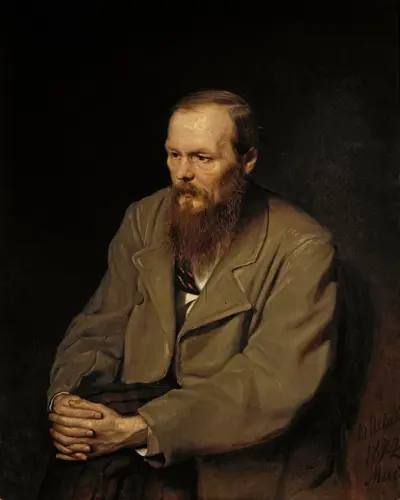
Fyodor Mikhailovich Dostoevsky, sometimes transliterated as Dostoyevsky, was a Russian novelist, philosopher, short story writer, essayist, and journalist. Dostoevsky's literary works explore human psychology in the troubled political, social, and spiritual atmospheres of 19th-century Russia, and engage with a variety of philosophical and religious themes. His most acclaimed works include Crime and Punishment (1866), The Idiot (1869), Demons (1872), and The Brothers Karamazov (1880). Dostoevsky's body of works consists of 12 novels, four novellas, 16 short stories, and numerous other works. Many literary critics rate him as one of the greatest psychological novelists in world literature. His 1864 novel Notes from Underground is considered to be one of the first works of existentialist literature.
