Imre Kertesz Quotes
In a democracy, you have to find a market niche, make sure a novel is 'interesting' and 'spectacular.' That may be the toughest censorship of all.
Kertész, Imre. "A Stranger in His Own Land." Interview by Maya Jaggi. The Guardian, 9 Nov. 2002.

Her organization does survey research throughout the world. The “freedom” to conduct a survey does not exist in many if not most of the nations around the world. Even a democratic country like India requires government approval to conduct a survey.

Video and pirated copies got out, and were more widely distributed than if the film had been released.


The Red Scare had affected the country. The House Un-American Activities Committee had frightened much of the country claiming that the Communists had infiltrated the government. But when facts and proof were demanded, they only came up with some workers in the Hollywood film industry who had gone to communist meetings and some who had joined the party before the War when The Great Depression was still plaguing the country. The Hollywood and TV executives caved in to the political demagogues and fired and blacklisted not only the communists but those who refused to testify. The actors and musicians could not work for several years until the country came to its senses, but the screenwriters wrote under false names. At least one Academy award was won that way.


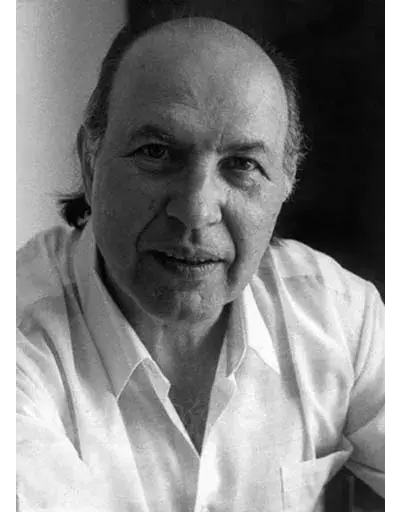
Imre Kertész was a Hungarian author and recipient of the 2002 Nobel Prize in Literature, "for writing that upholds the fragile experience of the individual against the barbaric arbitrariness of history". He was the first Hungarian to win the Nobel in Literature. His works deal with themes of the Holocaust (he was a survivor of a German concentration camp), dictatorship and personal freedom. He died on 31 March 2016, aged 86, at his home in Budapest after suffering from Parkinson's disease for several years.
