Leland Stanford Quotes
In a condition of society and under an industrial organization which places labor completely at the mercy of capital, the accumulations of capital will necessarily be rapid, and an unequal distribution of wealth is at once to be observed.
Stanford, Leland. Co-operation of Labor: Speech of Hon. Leland Stanford of California in the Senate of the United States, February 16, 1887. Washington: Government Printing Office, 1887.


We are still grappling with the distribution of wealth issue.


The same greatest issue was still before the people a century later. See {633217} , {635104} & {630538}.


Much if the American industrial revolution was assisted by government subsidies of one kind or another. Railroads, telegraph, armaments, foundries are just a few.

The major problem at the time was not the capitalist in the industrial revolutionary sense of the word as there was little industry. China as an agrarian society but the vast majority of the land was owned by relatively few wealthy families. It was close to a feudal system and that was the target for the Communists and their revolution. There was a very small proletariat. Their methods were brutal, but they executed the landlords and the class warfare ended quickly. Sun Yat-sen was not able to solve the land problem, nor was Chiang Kai-shek as most of his major supporters were landowners of warlords who controlled the landowners.


He was concerned about what would happen if Georgia allowed slavery. In addition to all the other concerns—see the related quotes—he had, he was concerned that the slave traders (he used the term “Negro Merchants”.) would dominate the economy and place slaves in all the working jobs leaving “leaving nothing for all the laboring poor white Men”.
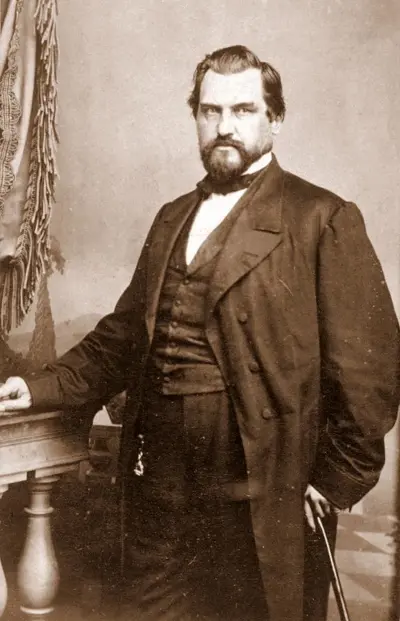
Amasa Leland Stanford was an American industrialist and politician. He was the founder (with his wife, Jane) of Stanford University. Migrating to California from New York at the time of the Gold Rush, he became a successful merchant and wholesaler, and continued to build his business empire. He spent one two-year term as Governor of California after his election in 1861, and later eight years as a United States Senator. As president of Central Pacific Railroad, beginning in 1861, and later Southern Pacific, he had tremendous power in the region and a lasting impact on California. He is widely considered a robber baron.
