Greg Grandin Quotes
In 2000, just before leaving the White House, Clinton ratcheted up military aid to Colombia. Plan Colombia, as the assistance program was called, provided billions of dollars to what was, and remains, the most repressive government in the hemisphere.
Grandin, Greg. "Hillary Clinton Wants to Do to Central America What Bill Clinton Did to Colombia." The Nation, 15 Apr. 2016.


[During the Guatemalan Civil War, the military had often tortured, murdered disappeared and sexually enslaved female relatives of men they suspected of being rebel. The object was to humiliate and emasculate the insurrectionists so that others will not join them and they will cease their revolutionary activities to protect their women. The civil war ended in 1996, and although military war criminals had been tried earlier but never for crimes – sexual crimes against women. 20 year had elapsed since the end of the war and this famous trial. The two war criminals were sentenced to 120 and 240 years in prison respectively, but they had escaped justice for more than two decades. The United States, in the middle of the Red Scare was supporting and financing the Guatemalan government and military. In addition America trained many of the military in counter-insurgency which taught some methods that were contrary to International Law and which were illegal for American soldiers to engage in. After official documents of the era were declassified, it became clear that U. S. officials—–especially the CIA--were aware of the excesses and war crimes of the Guatemalan military, but did little to stop it. See Quotes 583699, and 583697 for more on the American involvement.]
The School of the Americas has been run by the United States Army and provides training for Latin American Military Officers in Counter-Insurgency Training. The graduates of the school have included some of the worst Latin American killers and torturers (See {41061} for example) who rose to positions of power in their lands. It has also included many leaders who did not ever resort to war crimes and atrocities and also became leaders of their countries. It has been an institution of great controversy since it was discovered that the school at one point taught methods of interrogating insurgents that were tantamount to torture. Defenders of the school claim that but for the school, the military atrocities would have been worse and that it contributed to more human and democratic governments in the Americas.

In Chile’s first Democratic election, to the chagrin of our Ambassador Korry and others in the U. S. Government, an avowed Socialist, Allende, was chosen by the people. Korry and others then stopped any U. S. Aid and did what they could to have the Allende Administration. However, Henry Kissinger and the CIA did not want to wait for economic sanctions to work. Keeping our Ambassador in the dark, they helped the right wing Chilean Military organize a coup to remove Allende. Allende committed suicide rather than be captured by General Pinochet and other military who commonly tortured political enemies and killing many. The result was an end to socialism, but the cost was tens of thousands of Chileans, murdered, tortured and disappeared by Pinochet and his forces. Pinochet was finally convicted of war crimes and crimes against humanity.


In 2002 he thought that President George W. Bush was the fool American. He thought the invasion of Iraq was a terrible idea which was doomed to failure.
They almost certainly did when they put down some protests / demonstrations during the Arab Spring. Sophisticated allies point out that the United States (Ohio National Guard) troops that killed the peaceful anti-Vietnam War protesters did so with American made weapons.
There are many who disagree with Stewart on two grounds. First, the failed state sill not use the aid reasonably and it will wind up in the pockets of war lords of terrorist groups. Second, the failed state often becomes a safe haven for terrorist groups to operate and train from.

The “help” was a covert CIA 1954 operation that overthrew the government


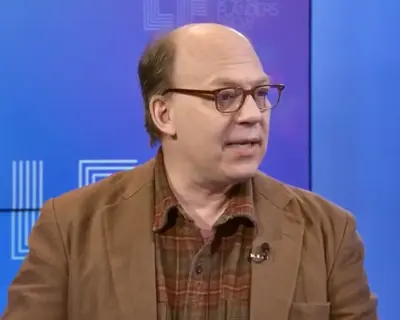
Greg Grandin (born 1962) is a professor of history at Yale University. He previously taught at New York University. He is author of a number of books, including Fordlândia: The Rise and Fall of Henry Ford's Forgotten Jungle City, which was a finalist for the Pulitzer Prize for History, as well as for the National Book Award and a National Book Critics Circle Award. A more recent book, entitled, Who Is Rigoberta Menchú?, focuses on the treatment of the Guatemalan Nobel Peace Prize winner. His 2014 book, The Empire of Necessity: Slavery, Freedom, and Deception in the New World, is a study of the factual basis for the novella Benito Cereno by Herman Melville.
