W. Mark Felt Quotes
I'm the guy they used to call Deep Throat.
O'Connor, John D. "'I'm the Guy They Called Deep Throat'." Vanity Fair, July 2005, p. 86.


Before the 1968 election, President Johnson, and gotten the North Vietnam Communists to agree to Peace Talks with the U. S. and South Vietnam. Then Candidate Nixon thought that if the peace talks were ongoing and making progress, there would be more support for the Democrats and Nixon's opponent Hubert Humphrey. So Nixon secretly send a secret emissary to South Vietnamese President Nguyen Van Thieu telling him that he would not get a very good deal because President Nixon claimed that President Johnson was too eager to end the Vietnam war. He suggested that if Thieu boycotted the peace talks, then when Nixon was elected, he would guarantee a much better deal for South Vietnam and Thieu personally. President Thieu boycotted the peace talks and there could be no progress. However there is a Federal Law, the Logan Act, that makes it a felony for a private American citizen to conduct or interfere with foreign policy or negotiations with a foreign government. President Johnson found out about Nixon's sabotage of the Peace Talks, called Nixon (see {583263}) and threatened him with prosecution if he interfered further. LBJ had decided that with the left wing at odds with the U. S. Government over the Vietnam war, a prosecution of Nixon would cause the Right Wing to challenge the government also and the country didn't need further polarization. He would do that only if Nixon did not heed the President's warning. But when Nixon won the election and became President, he was terribly anxious that his pre-election crimes would be made public, and spent much of his time and staff effort trying to find out who knew about his politically self-serving felony and who might make his crime public.


Sung to the tune of an old English pub song, "Down at the Olde Bull and Bush." The Congressman also fancies himself a pianist.


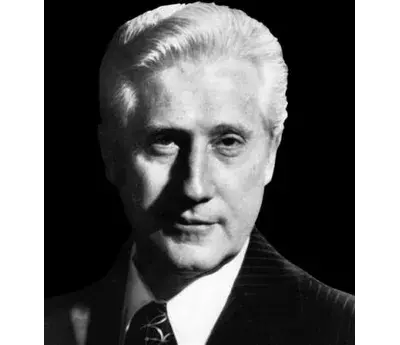
William Mark Felt Sr. was an American law enforcement officer who worked for the Federal Bureau of Investigation (FBI) from 1942 to 1973 and was known for his role in the Watergate scandal. Felt was an FBI special agent who eventually rose to the position of Associate Director, the Bureau's second-highest-ranking post. Felt worked in several FBI field offices prior to his promotion to the Bureau's headquarters. In 1980 he was convicted of having violated the civil rights of people thought to be associated with members of the Weather Underground, by ordering FBI agents to break into their homes and search the premises as part of an attempt to prevent bombings. He was ordered to pay a fine, but was pardoned by President Ronald Reagan during his appeal.
