John J. McLaughlin Quotes
I'm proud to be associated with the public policies of Richard Nixon.
Schudel, Matt. "John McLaughlin, TV host who made political talk a contact sport, dies at 89." The Washington Post, 16 Aug. 2016.


When Nixon was running for President in the 1968 Presidential campaign, he learned from Henry Kissinger that the Johnson administration had made an agreement with the Russians and North Vietnamese that America would stop the bombing of North Vietnam if there would be Peace Talks to end the Vietnam War. Nixon feard that although the polls showed him ahead of Vice President Humphrey, the announcement of ongoing peace talks would bring many of the anti-war Democrats who were not supporting Humphrey because of the Vietnam War out to vote for Humphrey to support the Peace Talks. Nixon decided to sabatouge the Peace Talks by persuading Vietnamese President Nguyen Van Thieu not to come to the peace table so there coulod be no talks. He accomplished this by having Anna Chennault, an extreme right-wing fund raiser who was the widow of General Chennault of Flying Tiger fame and who had connections with all the right wing politicans in Asia, get word to President Thieu that President Johnson would sell him out in the peace upcomming peace talks, and that if he would boycott the peace talks till after the American Presidential election, Nixon as the New Presidnt would be sure that Thieu would remain in control of South Vietnam or there would be no peace and America would continue the war until the North Vienamese would agree to a peace that kept Thieu in power. Earlier, Nixon had appointed Anna Chennault as the Offical Spokesperson of the Campaign on Asia. What Nixon did was a felony--private citizens are not alowed to intere with government negotiatons or descussions with foreign governments, under the Logan Act Many think that the action was legally Treason. Hoever, Nguyen VanThieu did boycott the peace talks despite all the entreaties of President Johnson and his administration. There were no peace talks and the public never even knew that there had been this attempt. The anti-Vietnam War voters mostly did not vote and Nixon won a close race. Shortly after the election, before Nixon could be sworn in, via the FBI Johnson learned of Chennault's activities but thee was no evidence to tie Nixon to the South Vietnam refusal to come to the peace table. It neever became a public issue although several leading politicians had learned what had really occured--see Quotation 664238. However, 0ver 40 years later, when Nixon's Chief of Staff's notes were finally made public, the smoking gun was dislosed and Farrell wrote this in his 2017 Biography of Richard Nixon. See Related Quotes for quotations from H. R. Haldman's hadnwritten notes of his phone call with Nixon, and other evidence that had also been uncovered.


This quotation is puzzling to many in that Olasky seems to be castigating the President because he wanted to develop a “Great Society”—because he had a great vision for America. However, to Olasky and a small core of religious fundamentalist conservatives a President wanting to develop a great society was bad for two reasons. They do not believe that the government – any government should shape the nature of the society or interfere with individuals and families in shaping society. A government that could have such a vision and implement it must be a big government which is per se undesirable. In addition, in their orthodox view God has already determined the vision for society and no man should try and substitute his vision for God’s commandments. This concern of an energetic secular government having independent vision is not only a problem for the right wing Christian fundamentalists, but is typical of Muslim fundamentalists and Jewish also. There were a small minority of Jewish Israeli fundamentalists who objected to the creation of the State of Israel at the birth of the Jewish state for the same reasons that Olasky gives for opposing a strong visionary government.

During his 1976 presidential campaign, Carter told reporters that they had treated him very well so far. "Compared to what?" asked one reporter. Carter shot back:
President Johnson was trying to organize peace talks in Paris. Nixon didn’t want a public announcement to occur before election day when he was running against Hubert Humphrey. Knowing the South Vietnamese President was reluctant to go to Paris but was under pressure from America to do so, he sent a message through Chennault that he should not accept and “hang on” as Nixon would shortly win. The South Vietnam president refused to go to Paris, Nixon won the election, and then had to cope with the continuation of the war that might well have ended before he took office. Nixon believed that he could get Russia and China to pressure Ho Chi Min to make peace. Nixon's private overtures to the South Vietnam president, violated the Logan Act which prohiited private citizens negoatioating with foreign governments. President Johnson was aware of Nixon's commission of this felony want wanted to prosecute him, but the evicence had been obtained from secret intelligene agency bugging and wiretapping both the South Vietnam Embassay in Wishington and the Presidential Palace in Vietnam the public knowledge of which would have caused a scandal. Instead, he called Nixon and warned him to stop, but the damage had already been done, and the South Vitenamese government would not go to Pariis where they would have to agree to a coalition government with the Communists. THey waited for Nixon to deliver a peace treaty which would leave them in charge of South Vietnam. In the final analysis, the South Vietnamese ended up with nothing and no participation in anything when the U. S. Withdrew and the Communists took over.


While Bannon was more critical of anyone who disagreed wiuth him than most, it was unusual for a conservative to use such harsh tems about a conservative presidential administration.
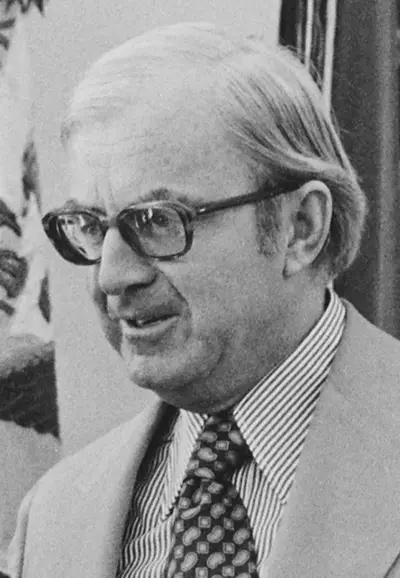
John Joseph McLaughlin was an American television personality and political commentator. He created, produced, and hosted the political commentary series The McLaughlin Group. He also hosted and produced John McLaughlin's One on One, which ran from 1984 to 2013.
