Napoleon Bonaparte Quotes
If you wish to be a success in the world, promise everything, deliver nothing.


In 1915 the Balkans was contorted by War and political intrigue. Serbia in particular was totally unrealistic about making any concessions to Bulgaria. Grey and his associates tried to explain the realities to the Serbian Ambassador who, before the British could articulate the whole situation, told them that he and the rest of the Serbian leadership would rather die than give up any territory. Grey later observed :


Monte and several over Republicans had agreed to serve on his Hispanic Advisory Committee of his Campaign for the Presidency. However, Trump made some very insulting generalizations about Hispanic immigrants for example calling them "rapists". The Committee and most other Republican Leaders had informed Trump that his rhetoric was counter productive and turning off minority voters. Trump had indicated that he would change his approach and soften his policies and his rhetoric against immigrants and minorities, and seemed to do that in a =visit with the President of Mexico. He returned to the United States and held a major rally where Monte's Committee and the Republican National Committee understood that he would pivot and take a new approach. He delivered the speech with the members of the Hispanic Advisory Committee behind him, and then surprised them all and went back to his hard line, insulting positions and rhetoric that had distressed many before. Monto and other members to the Hispanic Advisory committee resigned in protest and were particularly resentful that Trump would use them as in his speech that was televised when Trump must have known that he was going back to his original positions to which they had objected.


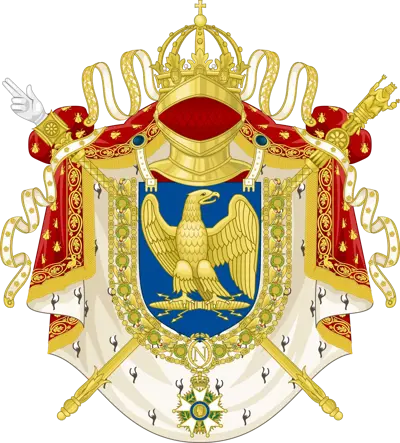
Napoléon Bonaparte was a French military and political leader of Corsican descent. He rose to prominence during the French Revolution and led several successful campaigns during the Revolutionary Wars. As Napoleon I, he was Emperor of the French from 1804 until 1814, and again in 1815. Napoleon dominated European and global affairs for more than a decade while leading France against a series of coalitions in the Napoleonic Wars. He won most of these wars and the vast majority of his battles, building a large empire that ruled over continental Europe before its final collapse in 1815. One of the greatest commanders in history, his wars and campaigns are studied at military schools worldwide. He remains one of the most celebrated and controversial political figures in human history.
