Wole Soyinka Quotes
If you are corrupt and you have extra cash you are able to shut the mouth of your accuser and they will be silenced.
Jeyifo, Biodun, editor. Conversations with Wole Soyinka. University Press of Mississippi, 2001.


Statements like this one have set the stage and tone for what many think are the excessive paranoia of many Scientologists.


At the fall of the Soviet Union, the sell off of much of the state assets to private enterprise fell into the control of a few, so called oligarchs. Many of these looted the enterprises that they controlled. None the less, they were considered leading citizens and many were politicians.

The highest court in New York. At the time, bribery of foreign officials was not illegal by American law, but it was deemed sufficiently contrary to public policy that the courts would not enforce contracts requiring such. Late in the 20th century, Congress finally passed the legislation to make most bribery of foreign officials illegal. A loophole was left for minor “ministerial” bribes to process documents, clear customs and other activities where gratuities are commonly expected for ministerial functions.

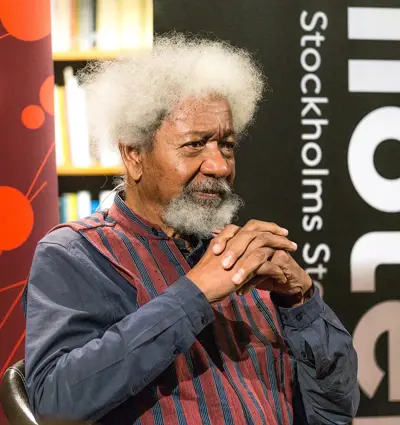
Akinwande Oluwole Babatunde Soyinka, known as Wole Soyinka (pronounced [wɔlé ʃójĩnká]), is a Nigerian playwright, novelist, poet, and essayist in the English language. He was awarded the 1986 Nobel Prize in Literature, the first sub-Saharan African to be honoured in that category. Soyinka was born into a Yoruba family in Abeokuta. In 1954, he attended Government College in Ibadan, and subsequently University College Ibadan and the University of Leeds in England. After studying in Nigeria and the UK, he worked with the Royal Court Theatre in London. He went on to write plays that were produced in both countries, in theatres and on radio. He took an active role in Nigeria's political history and its struggle for independence from Great Britain. In 1965, he seized the Western Nigeria Broadcasting Service studio and broadcast a demand for the cancellation of the Western Nigeria Regional Elections. In 1967, during the Nigerian Civil War, he was arrested by the federal government of General Yakubu Gowon and put in solitary confinement for two years.
