Richard Perle Quotes
If we just let our vision of the world go forth, and we embrace it entirely, and we don't try to piece together clever diplomacy but just wage a total war, our children will sing great songs about us years from now.
Perle, Richard. Quoted in "The New Rulers of the World" by John Pilger, New Statesman, 9 Dec. 2002.


Just like Spain and Persia, the Arabs by fighting lost not only more land, but also lost the respect of most of the non-Muslim War. The conscious decision to choose an irrational strategy that would cause loss of life, land and respect has none-the-less repeatedly been chosen by the Arab culture. much to its detriment. Azzam is one of the few Arabs to admit this to the non-Islamic World.


He grossly underestimated the intensity of the American patriotic feeling and the fighting ability of the Colonists. He Commanded the Royal Marines at the Battle of Bunker Hill where he was killed by a shot fired by ex-slave and Black Patriot, Peter Salem. Note the recommendation to destroy towns. At the time, that was considered improper in warfare between nations, yet it was not so clear in fighting a rebellion. However, this was against British policy and it was not a tactic employed in trying to suppress the American Revolution.


For various historical reasons the United States and Iran at that time had no diplomatic relations and there was no easy way for the countries to negotiate their differences. The United States public policy was that Iran would not be allowed to develop a nuclear weapon which was backed up by severe economic sanctions and the threat of military force. Kucinich wanted face to face negotiations and discussions before we resorted to military action.


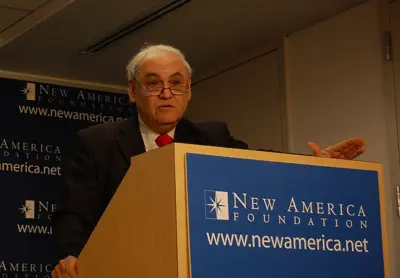
Richard Norman Perle is an American political advisor who served as the Assistant Secretary of Defense for Global Strategic Affairs under President Ronald Reagan. He began his political career as a senior staff member to Senator Henry "Scoop" Jackson on the Senate Armed Services Committee in the 1970s. He served on the Defense Policy Board Advisory Committee from 1987 to 2004 where he served as chairman from 2001 to 2003 under the Bush Administration before resigning due to conflict of interests.
