Wilhelm Dilthey Quotes
If we conceive all the changes in the physical world as reducible to the motion of atoms, motions generated by means of the fixed nuclear forces of those atoms, the whole of the world could thus be known by means of the natural sciences.
Dilthey, Wilhelm. Selected Works, Volume I: Introduction to the Human Sciences. Edited by Rudolf A. Makkreel and Frithjof Rodi, Princeton University Press, 1989.


This quotation illustrates a facet of science that often affects politics. At the time there had been much new information that tended to give more and more support to the notion of the atom. Most physics were by then convinced that there were atoms and that they seemed to behave just like Newton’s laws predicted that all bodies would. Mach however, would not even accept the fact that atoms really existed. He was not just any scientist but one of the better and more prestigious physicists in the world. New ideas are rarely accepted by all, even in the scientific disciplines. In the late 20th century scientific evidence began to be amassed indicating that there was global warming and a significant part of it was man made. As the data kept accumulating and the results of studies were understood, the vast majority of scientists became convinced about global warming. But there were a few who did not think that there was yet sufficient evidence to reach that conclusion, just as Mach was in 1897 convinced that there the atoms existence had not been demonstrated and in his judgment he did not think that atoms were a reasonable explanation of the physical world. But the fact that he had not yet become convinced should be examined by policy makers and juxtaposed against the reasons and the evidence by the other scientists. He might have been right; however he was not. The global warming nay sayers might be right, but with each passing day, the likelihood becomes less as more evidence is aggregated and analyzed.


This is almost the universal belief of scientists—religious or not. The faith of religion, if extended to science, does not give the person the tools of logic, empiricism, and deduction that is so critical for the scientist. The cleric, in contrast, requires faith. Politicians split. There are many who have the outlook of the scientist. However, there are also political ideologues, who want faithful adherence to the doctrine, as the theological leaders does, and does not subject the doctrine to analytic scrutiny.


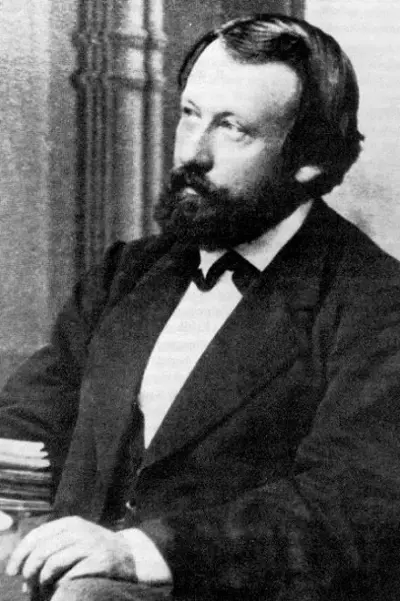
Wilhelm Dilthey was a German historian, psychologist, sociologist, and hermeneutic philosopher, who held G. W. F. Hegel's Chair in Philosophy at the University of Berlin. As a polymathic philosopher, working in a modern research university, Dilthey's research interests revolved around questions of scientific methodology, historical evidence and history's status as a science. He could be considered an empiricist, in contrast to the idealism prevalent in Germany at the time, but his account of what constitutes the empirical and experiential differs from British empiricism and positivism in its central epistemological and ontological assumptions, which are drawn from German literary and philosophical traditions.
