William Shakespeare Quotes
If thou dost marry, I'll give thee this plague for thy dowry: be thou as chaste as ice, as pure as snow, thou shalt not escape calumny.
Shakespeare, William. Hamlet. Edited by Barbara A. Mowat and Paul Werstine, Simon & Schuster, 2012, act 3, sc. 1, lines 145-147.

This is generally true in politics.


Calumnaire fortiter, et aliquid adhaerebit. See Pierre Beaumarchais for a later version of this political tactic.


Caesar's wife, Pompeia was rumored to have had an affair. Caesar started divorce proceedings, but in the trial he admitted that he had no evidence whatsoever of her alleged infidelities. He was then asked why he wanted to divorce her:


This quotation is the root of a great dilemma for all politicians who are attacked on a personal level. Most slanders are soon forgotten. The politician who reacts and publicly counters the slander inevitably does two things. More people become aware of the slanderous charges then there is a public battle over it, and the media tend to report the contest and hence the slanderous charge for a longer period of time than if it were uncontested. However sometimes the undefended charge is perceived as being true especially if it is a major charge. If the politician does not defend, the charge can get accepted and damage the politician’s standing. In the Kerry-Bush Prudential campaign, Kerry had the edge until the so-called Swiftboat Veterans made up a fictitious tale of Kerry, a decorated war hero, being a coward in the Vietnam war. Kerry thought the charge so preposterous that he didn’t bother to defend it. His lack of reaction was taken by much of the public as his admission of the charge. Kerry’s hero image was destroyed by a large enough proportion of the electorate that the electoral votes shifted to Bush, even though Kerry had the most votes by far. For each politician, the decision must be made for each charge and there is no clear way to know in advance which is the better strategy when a false charge is made.

Comey was objecting to the firing of several Assistant Attorneys General whom he thought were victims of parisanship.


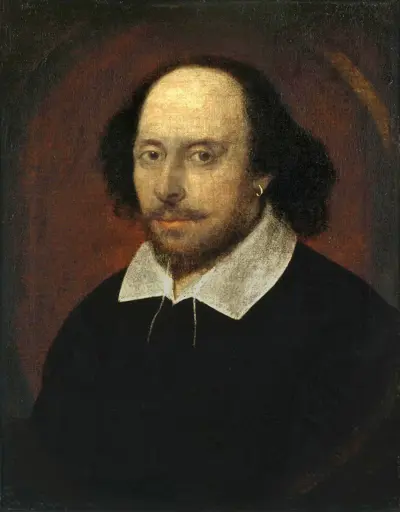
William Shakespeare was an English playwright, poet, and actor, widely regarded as the greatest writer in the English language and the world's greatest dramatist. He is often called England's national poet and the "Bard of Avon" (or simply "the Bard"). His extant works, including collaborations, consist of some 39 plays, 154 sonnets, three long narrative poems, and a few other verses, some of uncertain authorship. His plays have been translated into every major living language and are performed more often than those of any other playwright. They also continue to be studied and reinterpreted.
