Barry Goldwater Quotes
If they chased every man or woman out of this town who has shacked up with somebody else or got drunk, there wouldn't be any government left in Washington.
Commenting on the Senate debate over the confirmation of John Tower as Secretary of Defense, where the nominee was accused of being a womanizer and a heavy drinker:
Barry Goldwater, 1909-1998, U. S. Senator (Republican, AZ), Republican Nominee for President, Press statement, March 4, 1989
Sourced by: Eigen's Political and Historical Quotations

A conservative Calvinist weekly periodical. Just as today, there were few politicians who could stand up to such a test.


Referring to his opponent, John McClellan. Attack campaigning and slandering one’s opponent has a long history in American Politics.


This is an important quotation because it was believed by most of the Founding Fathers and the American public until relatively recently. Presidential candidates would not think of publicly campaigning. The view was that anyone who was ambitious for power and authority should not be trusted with it. The idea was first stated by Plato and has been a major view of Western politics since. Many still believe it, but no one has come up with a practical alternative in a large jurisdiction where there is no way to know about the possible candidates without their initiative. Earlier American presidential candidates, although they did not campaign as we know it, got associates to do their campaigning for them. At Presidential nominating conventions, candidates would not even attend. Abraham Lincoln for example never attended the convention at which he got nominated, but he had associates lining up delagates and he was managing their efforts behind the scenes.


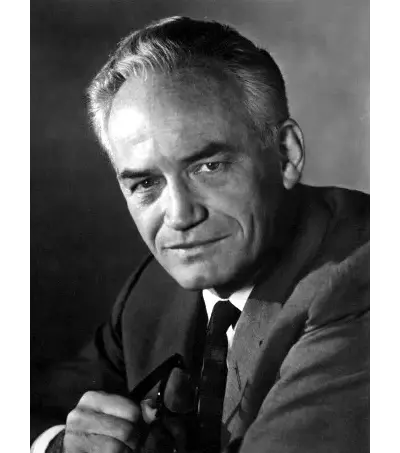
Barry Morris Goldwater was an American politician, statesman, businessman, United States Air Force officer, and author who was a five-term Senator from Arizona (1953–1965, 1969–1987) and the Republican Party nominee for president of the United States in 1964. Goldwater is the politician most often credited with having sparked the resurgence of the American conservative political movement in the 1960s. Despite his loss of the 1964 presidential election in a landslide, many political pundits and historians believe he laid the foundation for the conservative revolution to follow, as the grassroots organization and conservative takeover of the Republican party began a long-term realignment in American politics helped to bring about the "Reagan Revolution" of the 1980s. He also had a substantial impact on the libertarian movement.
