Oliver Wendell Holmes Jr. Quotes
If there is any principle of the Constitution that more imperatively calls for attachment than any other, it is the principle of free thought — not free thought for those who agree with us but freedom for the thought we hate.
Oliver Wendell Holmes Jr., 1841-1935, U. S. Supreme Court Justice, United States v. Schwimmer, 1929
Sourced by: Eigen's Political and Historical Quotations


Franklin wrote the speech, but was too old and ill to deliver it personally. James Wilson of Pennsylvania did the honors for him.


Ingersoll was considered to be the greatest orator and political thinker of his day, but his overt atheistic views curtailed his elected political career.

This quotation was used ten years later by Virginia which, in convention, passed a resolution objecting to the Alien & Sedition Acts. The drafter of the original resolution was James Madison.


Essentially, Scalia held that it was the job of the legislature to correct evils of society that he felt were not specifically mentioned in the Constitution. Other justices have argued that if the things are so evil and serious that they deny an individual the rights that were mentioned in the Constitutional, then they might be unconstitutional.


This is a typical statement of human rights policy by many countries. Essentially, some controlling authority states that rights are guaranteed except when it is “dangerous” or contrary to the country’s “best interest”. Of course then anything the authorities want to censor is classified so that it is an exception. To be a right, it must be guaranteed even when hateful, insulting and/or dangerous.


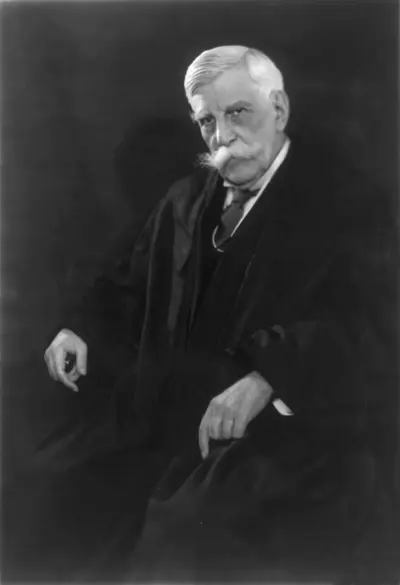
Oliver Wendell Holmes Jr. was an American jurist who served as an Associate Justice of the Supreme Court of the United States from 1902 to 1932. Noted for his long service, concise and pithy opinions, and deference to the decisions of elected legislatures, he is one of the most widely cited United States Supreme Court justices in history, particularly for opinions on civil liberties and American constitutional democracy, and is one of the most influential American common law judges, honored during his lifetime in Great Britain as well as the United States. Holmes retired from the court at the age of 90, an unbeaten record for oldest justice in the federal Supreme Court (although John Paul Stevens was only 8 months younger when he retired on April 12, 2010). He previously served as an Associate Justice and as Chief Justice of the Massachusetts Supreme Judicial Court, and was Weld Professor of Law at his alma mater, Harvard Law School.
