Douglas Adams Quotes
If somebody votes for a party that you don't agree with, you're free to argue about it as much as you like. ... But on the other hand, if somebody says, 'I mustn't move a light switch on a Saturday,' you say, 'Fine, I respect that.'
Adams, Douglas. The Salmon of Doubt: Hitchhiking the Galaxy One Last Time. Harmony Books, 2002.


Schlessinger had made derogatory remarks about homosexuals and her supporters claimed that she was entitled to freedom of speech.


Anne Hutchinson was tried by the Puritan religious and civil court for heresy. She started with Bible Study classes in her home and drew a substantial following. The clergy at the time were threatened and outraged. It was one thing for a woman to teach Bible Study to other women, but to also have men with the women was too much. The decision of the court was that she was banished from the colony. See {584753}.
_0_thumbnail_47x47.jpg)
This was the first political statement of either party regarding gay rights


After this statement was issued by the embassy, a mob stormed the embassy as shown in the graphic. The reason that this statement is an important quotation is that that Mitt Romney, the Republican candidate for President took the situation as an opportunity to attack the President. Specifically he claimed that this statement was an “apology” and it was terrible for America to apologize. The administration and most media fact checkers could not find anything in the statement that was an apology as opposed to as statement of United States policy and practice. Romney and his supporters insisted it was an apology. So the statement itself has become a major historical quotation where people can judge for themselves if indeed it was an apology. There are many who believed that under the circumstances an apology might not have been a bad idea. A few years earlier when a Danish magazine had published some insulting cartoons of The Prophet, riots broke out around the world and dozens of people were killed.

Seeger had been a member of the Communist Party and had left it in 1950. See {635866} & {635867}. He was later called before the House UnAmerican Activities Committee and asked to reveal the names of others who had been members. In those days of the red scare and McCarthyism, most people asked to name names and not wanting to do so “took the 5th Amendment” and could not be forced to. Seeger as a matter of principle refused to plead the 5th Amendment because he was not afraid of incriminating himself and had done nothing criminal anyway. So he, a veteran of WWII, instead refused to answer citing his First Amendment right of freedom of association. There was no legal precedent for this, and he was indicted and convicted for Contempt of Congress. However, his conviction was overturned by the Federal Appeals court. Seeger had prevailed. His point of not liking some of the places almost always referred to places that were overt practitioners of racial segregation where they didn’t like him any more than he liked them.


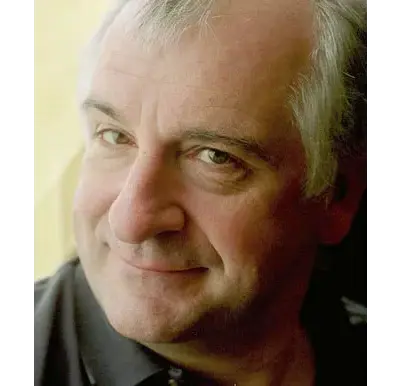
Adams is best known as the author of "The Hitchhiker's Guide to the Galaxy", which originated in 1978 as a BBC radio comedy before developing into a "trilogy" of five books that sold more than 15 million copies in his lifetime and generated a television series, several stage plays, comics, a computer game, and in 2005 a feature film. Adams's contribution to UK radio is commemorated in The Radio Academy's Hall of Fame. Adams was known as an advocate for environmentalism and conservation, as a lover of fast cars, cameras, technological innovation and the Apple Macintosh, and as a "devout atheist".
