John Burroughs Quotes
If one gains an interest in the history of the earth, he is quite sure to gain an interest in the history of the life on the earth. If the former illustrates the theory of development, so must the latter. The geologist is pretty sure to be an evolutionist.
Burroughs, John. Time and Change. Houghton Mifflin Company, 1912, p. 243.


While many people in America say they do not “believe in” evolution almost all of them do not know what evolution is much less understand what it is that they think is false. There are very few people who have studied evolution who reject it as being without merit in explaining life forms and their history. Almost all who are against it are religious fundamentalists who take the Judeo-Christian Bible literally. For their particular religion, evolution is a false doctrine, but there are many major religions in America for whom evolution is no problem. For example, Quakers, Unitarians, Congregationalists, Episcopalians, Lutherans, Reform Jews, Roman Catholics, Eastern Orthodox just to list some. Creationism, of which the quote author is an advocate, is an excellent religious solution to the contradiction between Evolution and the literal word of the Bible, but it is such terrible science, that it is not even considered science or taught in science curricula.


The school board had been pressured by religious fundamentalists throughout the state of Georgia to affix these stickers to all textbooks as there were no textbooks that met curricular standards that did not teach evolution. As soon as they started this practice, a suit was filed in the Federal District Court which found the practice violated both the Federal and Georgia State Constitutions ({586989}). The only reason that the stickers had been used was to try and placate those religious fundamentalists of the community who were opposed to the teaching of evolution. See {586968} for a quote from the legal opinion.


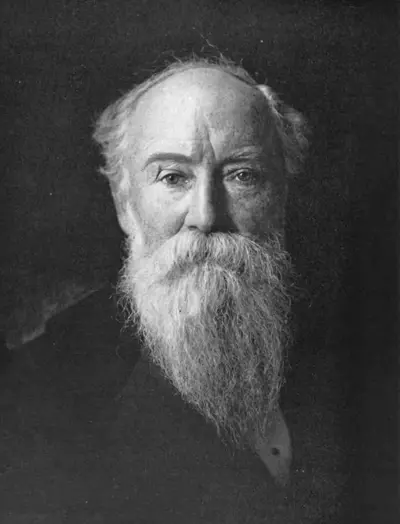
John Burroughs was an American naturalist and nature essayist, active in the U.S. conservation movement. The first of his essay collections was Wake-Robin in 1871.
