Murray Bookchin Quotes
If anarcho-communism served to regiment the population in the name of libertarian unity, if it served in any way through collectivist measures to deny the rights of the individual instead of reconciling the rights of the individual with the collective, I would definitely stand completely on the side of the individualist who is trying to rescue above all that most precious thing that makes us human - consciousness and personality.
Bookchin, Murray. "Interview with Murray Bookchin." Reason, Oct. 1979.


Most politicians and philosophers would argue that liberty is both an individual right and a group right. However there are money who do not recognize group rights and feel that they are inimical to individual rights.


This quotation is very critical to people interested in the Libertarian party and libertarian movements. Although she literally “loathed” the libertarians of the day, almost all modern libertarians credit the modern libertarian movement have not only started with her but even into the 21st century she is acknowledged to be the largest intellectual force of libertarianism. Actually, she was a very strong person with very firm ideas, and she was criticized by some people who called themselves libertarian and did not follow her philosophy of individual responsibility and liberty. Her reaction was not only to avoid identifying with them but to differentiate herself whenever she could.
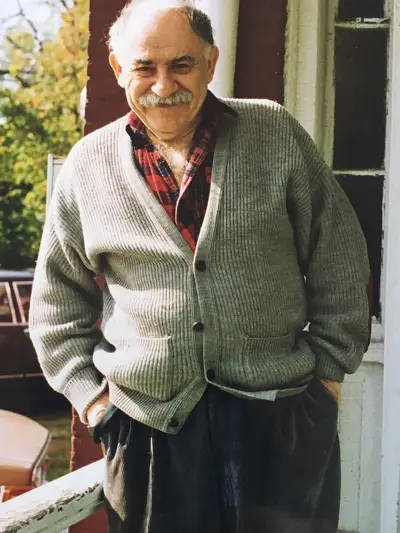
Murray Bookchin was an American anarchist, political philosopher, trade-union organizer, and educator. A pioneer in the environmental movement, Bookchin formulated and developed the theory of social ecology and urban planning, within anarchist, libertarian socialist, and ecological thought. He was the author of two dozen books covering topics in politics, philosophy, history, urban affairs, and social ecology. Among the most important were Our Synthetic Environment (1962), Post-Scarcity Anarchism (1971), The Ecology of Freedom (1982) and Urbanization Without Cities (1987). In the late 1990s, he became disenchanted with what he saw as an increasingly apolitical "lifestylism" of the contemporary anarchist movement, stopped referring to himself as an anarchist, and founded his own libertarian socialist ideology called communalism, which seeks to reconcile Marxist and anarchist thought.
