M. S. Swaminathan Quotes
If agriculture goes wrong, nothing else will have a chance to go right.
Swaminathan, M. S. Science and Sustainable Food Security. World Scientific, 2010, p. 2.


From a technical and production point of view, there is no practical limit to population size that is imposed by food production. We can produce sufficient food for the world even if population increases dramatically. None the less, even today we have some starvation and much malnutrition problems. These however are political, economic and tend to be distributional. We can produce the food. Morris does NOT advocate large population growth. Although food need not be a problem with an expanding population, job availability, medical care, energy, land, natural resources, ethnic hatred, migration, violence, and other problems are produced by population growth.

For many nations, it is an important objective to be totally self-sufficient in their food supply—so that they would not have to depend in other nations in what might be a world famine or food supply. For those nations agricultural subsidies are useful if their farmers cannot produce as cheaply and efficiently as other nations do. In the United States, with the most efficient agriculture in the world, subsidies are a waste of public money {633243} and the result of lobbying and special interest pressure and or corruption {633245}.

Environmentalists counter with the fact that the corporate and government interests in growth at any cost will, and have in the past, found a loophole in every reasonable compromise that has been made. Reasonableness is only a device they use to slow regulation until they can either figure out a loophole or use their great fiscal resources to shape public thinking to soften or eliminate the regulation. Therefore some environments argue that they must be as ideological about the environment as the corporations are about their rights to profit and not compromise even when a compromise appears reasonable. Besides, if the corporations always appear to win, the public will think opposing them is futile. So when they can be beaten on something that is unreasonable, they appear weaker and encourage more environmental public activism.
1700 scientists, including the majority of the American Nobel Prize Winners in Science, personally signed this 1992 warning about the environment.


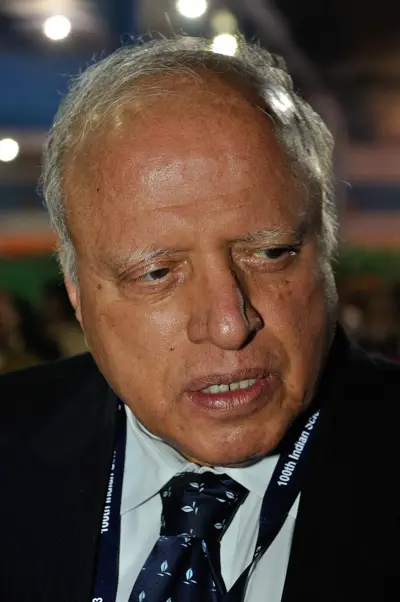
Mankombu Sambasivan Swaminathan is an Indian geneticist and administrator, known for his role in India's Green Revolution, a program under which high-yield varieties of wheat and rice were planted. Swaminathan has been called the "Father of Green Revolution in India" for his role in introducing and further developing high-yielding varieties of wheat in India. He is the founder of the MS Swaminathan Research Foundation. His stated vision is to rid the world of hunger and poverty. Swaminathan is an advocate of moving India to sustainable development, especially using environmentally sustainable agriculture, sustainable food security and the preservation of biodiversity, which he calls an "evergreen revolution."
