Ernest Hemingway Quotes
If a writer stops observing he is finished. But he does not have to observe consciously nor think how it will be useful. Perhaps that would be true at the beginning. But later everything he sees goes into the great reserve of things he knows or has seen.
Hemingway, Ernest. Interview with George Plimpton. The Paris Review, no. 18, Spring 1958, p. 76.


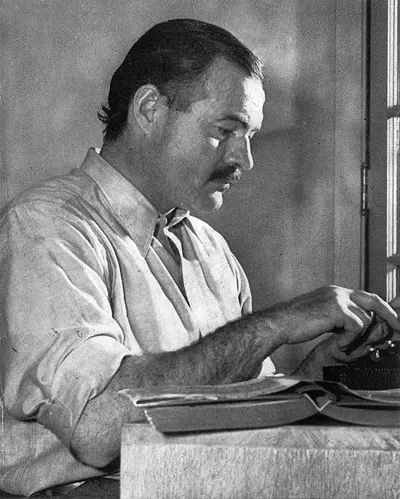
Ernest Miller Hemingway was an American novelist, short-story writer, journalist, and sportsman. His economical and understated style—which he termed the iceberg theory—had a strong influence on 20th-century fiction, while his adventurous lifestyle and his public image brought him admiration from later generations. Hemingway produced most of his work between the mid-1920s and the mid-1950s, and he was awarded the Nobel Prize in Literature in 1954. He published seven novels, six short-story collections, and two nonfiction works. Three of his novels, four short-story collections, and three nonfiction works were published posthumously. Many of his works are considered classics of American literature.
