Barry Goldwater Quotes
I would like to suggest one change, that Social Security be made voluntary, that if a person can provide better for himself, let him do it.
Barry Goldwater, 1909-1998, U. S. Senator (Republican, AZ), Republican Nominee for President, Press Conference, January 6, 1964
Sourced by: Eigen's Political and Historical Quotations


18 years later, his son—George W. Bush—made the “nutty idea” one of the main planks in his Presidential legislative program. After the younger Bush traveled the country selling his reform ideas, the public came down on the side of his father and rejected the President’s “nutty idea.”

Privatization is a proposal whereby individuals invest their own money in the Sock and Bond Market in an effort to get a better return than the government Social Security System produces. However, the initial cost is very high and the idea might be good for an individual hose investments pay off, but there could be no coverage for someone who invests poorly, is unlucky or whose investing agency goes bankrupt. There would be a lesser or no safety net which people would be guaranteed as they are with Social Security. In 2006 the George W. Bush administration tried to privatize the Social Security system. They failed in a major defeat for the administration.


This is one of the rare occasions where the person appointed to lead a major governmental program, publicy trashed the program and told citizens that they would never receive the benefits that they had already paid for. She was a partisan political appointment who had no real credentials, preparation or previous experience and her statement was so overtly political that few took the statement seriously although there were well known problems that Congress could fix as soon as they have the political will to do so. In the 15 years since this statement not a single worker has failed to obtain any benefits to which he/she was entitled. To see why such a statement can never be made with any certainty, see {619986} which explains the essence of Social Security.


This is a classic statement from the Tea Party wing of the Republican Party. Here he not only criticizes the most successful and popular program in American History, but he describes it as a criminal fraud and then claims that Social Security is the biggest threat to our democracy—a bigger threat than Al Qaeda and terrorism, a greater threat than global warming, a greater threat than the housing bubble and the Great Recession. The Tea Party blindness to the effect of these gross exaggerated and obviously false claims is fascinating. He seems totally sincere and yet it is hard for voters to believe that he actually has faith in what he says—although perhaps faith is all he has.

The minimum wage has never come close to meeting this ideal criterion in any country of the world. At the same time, health insurance costs in the U. S. and some other countries has been increasing at a much greater rate than wages, making this ideal situation even more unattainable.

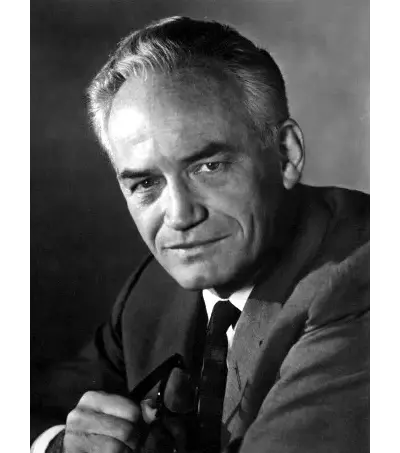
Barry Morris Goldwater was an American politician, statesman, businessman, United States Air Force officer, and author who was a five-term Senator from Arizona (1953–1965, 1969–1987) and the Republican Party nominee for president of the United States in 1964. Goldwater is the politician most often credited with having sparked the resurgence of the American conservative political movement in the 1960s. Despite his loss of the 1964 presidential election in a landslide, many political pundits and historians believe he laid the foundation for the conservative revolution to follow, as the grassroots organization and conservative takeover of the Republican party began a long-term realignment in American politics helped to bring about the "Reagan Revolution" of the 1980s. He also had a substantial impact on the libertarian movement.
