Georg C. Lichtenberg Quotes
I would give something to know for whose sake precisely those deeds were really done which report says were done for the fatherland.
Lichtenberg, Georg Christoph. The Waste Books. Translated by R. J. Hollingdale, New York Review Books, 2000, p. 73.


Quintus Horatius Flaccus. This famous quotation has been echoed in virtually every language and every country of the world. However, see Ernest Hemingway for a counter view.

Drumbo was morally opposed to war. He also refused to name Hollywood communists to Congressional Committees during the Red Scare. He was then blacklisted from his occupation, screen writing.

The Poles were fighting the Russians. Pulaski was a Field Marshall. This was before he had come to America and fought in the American Revolution.


Joseph Addison had earlier written of such a situation. Recent research has strongly suggested that Hale may never have said these words. The American patriots wanted to have heroes and may not have been too worried about the documentation and historical research. See {621112}


Ataturk was a young major at the time commanding troops of a weak and corrupt Ottoman regime. However a combined English and French (the strongest military powers in Europe) invasion of the Gallipoli Peninsula threatened to capture the Turkish capital, Constantinople. Ataturk alone rallied the Turkish defenders and fought the invaders to a standoff in long drawn out battle with huge casualties on both sides. Ataturk became a national hero. Although Ataturk thereafter was very reluctant to use military force or endanger troops, the thing he always thought worth the supreme sacrifice (including his own) was the independence and sovereignty of the nation. See {584502} for his continuing belief in this type of sacrifice.
Ataturk had been a military hero, but was very much opposed to war and military adventurism not unlike the Dwight Eisenhower and Colin Powell type leaders. However, the one thing that he thought worth the sacrifice of his own and other Turkish lives was Turkish independence and sovereignty. Historically, the Ottoman Empire which Ataturk finally ended, had dominated half of Europe and all of the Mid East at the cost of sovereignty of other nations and Ataturk saw no more important virtue with dying for than national sovereignty. See {125322} and {584501}.

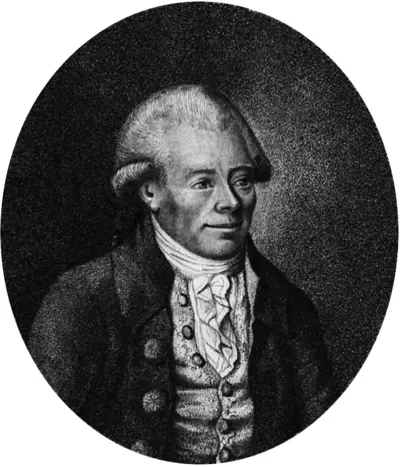
Georg Christoph Lichtenberg was a German physicist, satirist, and Anglophile. As a scientist, he was the first to hold a professorship explicitly dedicated to experimental physics in Germany. He is remembered for his posthumously published notebooks, which he himself called Sudelbücher, a description modelled on the English bookkeeping term "scrapbooks", and for his discovery of tree-like electrical discharge patterns now called Lichtenberg figures.
