Carl Sandburg Quotes
I won't take my religion from any man who never works except with his mouth.
Sandburg, Carl. Chicago Poems. Henry Holt and Company, 1916.


Clerics of the age were often combinations of fund raisers and tax collectors.


The Founding Fathers represented a wide range of religious beliefs from orthodox Christians to Agnostics and Atheists. Most considered themselves Christian, but having studied the terrible results of European religious dissention in Government were careful to keep government and religion separate. In New York City, for example, when George Washington was first inaugurated as President, there was no religious ceremony in the government buildings. However, the President and all the Congress then went to Trinity Church close by and had a religious service. The earliest example of separation of church and state was a separation of official religion—not an elimination of religion.

The Roman Catholic Clergy as well as the Vatican was quite corrupt in Luther’s time which was one of the reasons for his reform effort. Throughout history some clerics have abused their positions and roles and acted as impediments to the faith in their own religions.


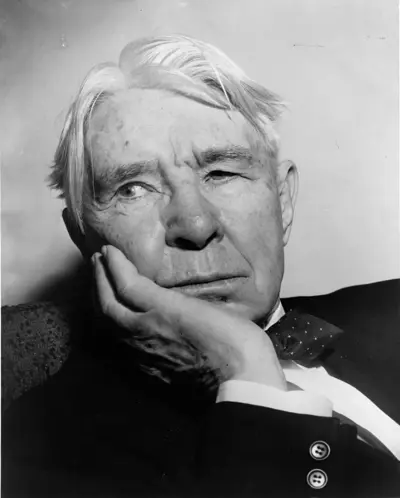
Carl August Sandburg (January 6, 1878 – July 22, 1967) was an American poet, biographer, journalist, and editor. He won three Pulitzer Prizes: two for his poetry and one for his biography of Abraham Lincoln. During his lifetime, Sandburg was widely regarded as "a major figure in contemporary literature", especially for volumes of his collected verse, including Chicago Poems (1916), Cornhuskers (1918), and Smoke and Steel (1920). He enjoyed "unrivaled appeal as a poet in his day, perhaps because the breadth of his experiences connected him with so many strands of American life", and at his death in 1967, President Lyndon B. Johnson observed that "Carl Sandburg was more than the voice of America, more than the poet of its strength and genius. He was America."
