Sam Harris Quotes
I was actually already doing my Ph.D. in neuroscience when September 11 happened. 'The End Of Faith' is essentially what September 11 did to my intellectual career at that moment.
Harris, Sam. The End of Faith: Religion, Terror, and the Future of Reason. W. W. Norton & Company, 2004.


This quotation illustrates the difficulty when a jurisdiction adopts an established religion. From a freedom point of view, it is bad that Hamas insisted on all these rules for Muslims, but when they insist that Christians (and others) follow them as well, it becomes very difficult to have a harmonious society.


This is a brilliant political response to what could have been a politically damaging situation. Many Baptists in the branch of Baptism to which Huckabee belongs does not believe that people of some other religions can go to heaven. If the governor said he did not believe similarly, he would upset many of his coreligionists who were the core of his political base. If he publicly answered that he agreed some religions would be precluded from heaven, he would be regarded as narrow-minded and would upset many other potential voters from other religions. So, he gave an answer which dealt with the issue of heaven but never gave a hint of where he stood on the issue.

Franklin was a deist. He believed in God and the Creation but not the Bible which is often referred to as “revealed” truth. He did believe that classic Christianity was a positive force as some people were led to good works and a moral life by it.


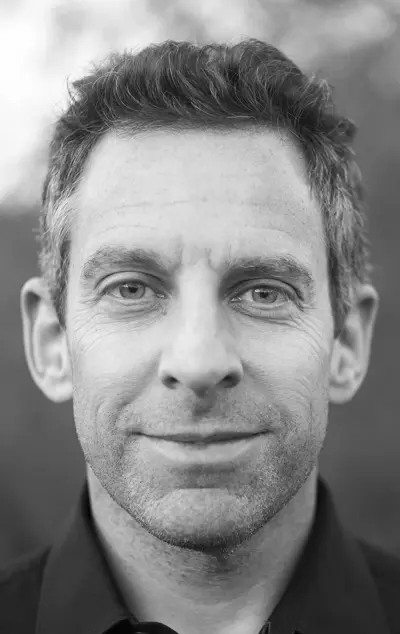
Samuel Benjamin Harris is an American author, philosopher, neuroscientist, and podcast host. His work touches on a wide range of topics, including rationality, religion, ethics, free will, neuroscience, meditation, psychedelics, philosophy of mind, politics, terrorism, and artificial intelligence. Harris came to prominence for his criticism of religion, and Islam in particular, and is described as one of the "Four Horsemen of the Non-Apocalypse", along with Richard Dawkins, Christopher Hitchens, and Daniel Dennett.
